
Why Your Bathroom Sink Drains Slowly (and How to Fix It)
A bathroom sink that drains slowly is one of the most common plumbing complaints, and one of the easiest to fix. In most homes the culprit is a small clog of hair, soap and toothpaste right at the stopper or in the trap below. But a slow drain can also hint at a deeper blockage. Here is how to tell the difference and clear it without damaging your pipes.
Common Causes of a Slow Bathroom Sink
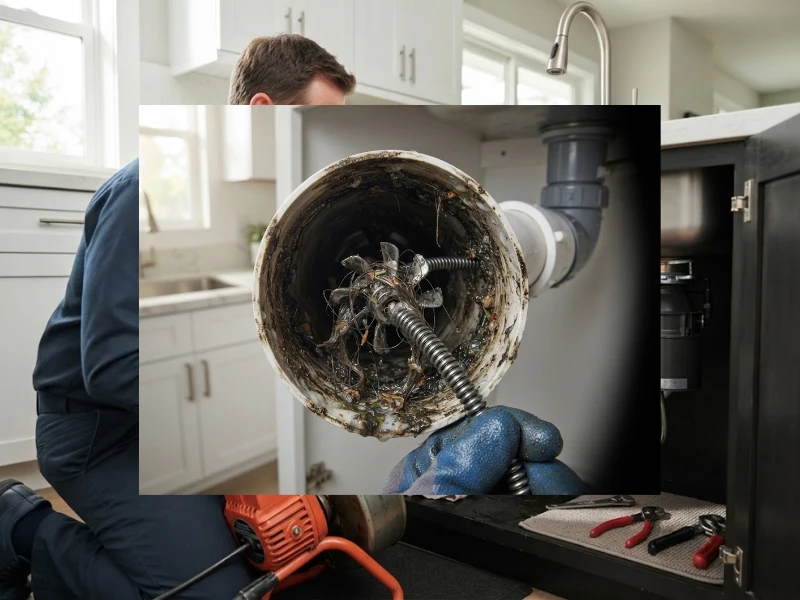
Bathroom sinks clog for different reasons than kitchen sinks. There is no grease or food going down the drain — instead, the trouble comes from what we wash off our bodies. The most frequent causes are:
- Hair. Even short hair binds with soap and forms a mat that catches everything else.
- Soap scum. Bar soap and hard-water minerals create a sticky film that narrows the drain.
- Toothpaste and dental floss. Toothpaste hardens, and floss wraps around the stopper and trap arm.
- Shaving cream and lotions. Creams leave a residue that grabs hair and skin cells.
- Mineral scale and corrosion. In older Chicago homes, rough pipe walls catch debris more easily.
- A partially closed or clogged pop-up stopper. The stopper itself can be the whole problem.
The location of the clog matters. A clog at the stopper or in the P-trap under the sink is local, easy to reach and simple to clear. A clog further along the branch line or in the main drain is a different problem, and it usually shows up in more than one fixture.
Hair, Soap and Toothpaste Buildup
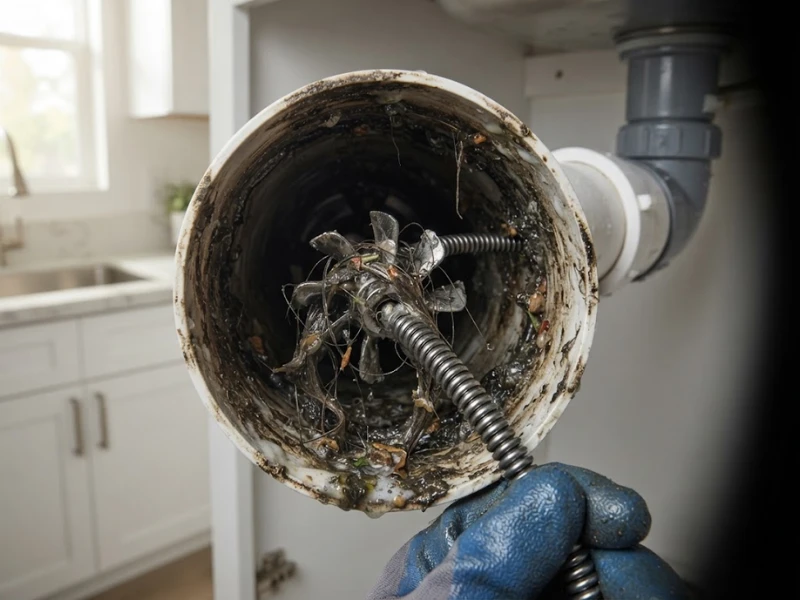
Here is what happens over time. Hair slips past the stopper and settles in the curved P-trap, where it tangles into a loose ball. Soap scum and toothpaste coat that ball, turning it into a sticky, solid mass. Water can still push past the edges for a while, so the drain is slow but not yet stopped. Each use adds another layer. The drain gets slower and slower until it finally backs up completely.
A simple hair-catching strainer in the drain is the cheapest fix you can make. Clean it weekly, and the buildup that would have formed in the trap never gets a chance to start.
Gravity works against you too. Trap arms often run nearly flat, and in older homes they may sag. When the pipe slopes the wrong way, water sits in the low spot and the debris in it settles instead of washing away. This makes the drain slow even when there is no big clog yet.
The Pop-Up Stopper and P-Trap
Before you assume the worst, check the two simplest suspects: the pop-up stopper and the P-trap.
The pop-up stopper is the plug you lift to let water out. Hair and soap collect on the underside and around its base, and the linkage that lifts it can also be partly stuck. To clean it, raise the stopper all the way up and either twist it out or reach under the sink, loosen the pivot nut behind the drain and pull the stopper free. Wipe off the hair and film, rinse it, and put it back. Many slow drains are instantly fixed at this step.
The P-trap is the U-shaped pipe below the sink that holds a small amount of water to block sewer gas. It is also where hair and debris collect. To clean it, place a bucket underneath, unscrew the two slip nuts by hand or with channel-lock pliers, and remove the trap. Expect a little water. Clean the inside with a bottle brush or a rag, check that the washers are in good shape, and reassemble it hand-tight. Run water and check for leaks.
Older chrome and brass traps can be seized or brittle. If a nut will not budge or the metal feels thin, stop before you crack it. A broken trap means a leak under the sink and a call to a plumber anyway.
DIY Fixes That Work
If the stopper and trap are clear, work through these steps in order, from gentlest to most aggressive.
- Hot water flush. Pour a kettle of hot (not boiling) water down the drain to soften soap and grease. Repeat once or twice.
- Plunger. Block the overflow hole with a wet rag, fill the basin with an inch of water, and plunge with a firm seal for 15 to 20 seconds. The rag forces pressure down the drain instead of out the overflow.
- Hand snake. A small drum-style snake fed gently into the drain can grab the hair mass. Feed it slowly, turn the handle to hook the debris, and pull it out. Never force it past resistance.
- Baking soda and vinegar. A cup of baking soda followed by a cup of vinegar fizzes away light film and is safe for all pipes. Follow with hot water.
What about chemical drain cleaners? They are tempting, but they are a poor fit for bathroom clogs. They rarely dissolve hair, the main culprit, and the caustic ingredients generate heat that can damage older metal and plastic pipes. They also leave a residue that can burn skin if you open the trap later. Our article on chemical drain cleaner safety explains the risks. For most sinks, a $5 hair snake and hot water outperform any bottle of chemicals.
If you would rather have the job done thoroughly, drain cleaning uses the right tools for the clog, and a drain clog repair visit can address the cause if the line keeps slowing down.
When to Call a Plumber
A slow sink that clears with basic tools is a nuisance you can handle. Other situations need a professional, because the blockage is beyond the sink. Call a plumber when:
- The sink stays slow even after you clean the stopper, trap and branch line.
- More than one fixture drains slowly — a sign of a branch or main line problem.
- You see or smell sewage, or water backs up into the tub or a floor drain.
- The same sink clogs again within weeks.
- You have old or fragile metal pipes and do not want to risk cracking them.
For stubborn or recurring buildup, hydro jetting scours the pipe walls clean and restores full flow, which is the durable fix when a snake keeps leaving debris behind. For an older homes' broader drainage issues, pipe repair and replacement may be the long-term answer.
Ready to stop dealing with a slow sink? Call Plumber Lincoln Park at (773) 514-3504 and we will clear it the same day.
Frequently Asked Questions
Why is my bathroom sink draining slowly?
The most common cause is a buildup of hair, soap scum and toothpaste in the pop-up stopper or the P-trap just below the sink. If other fixtures drain slowly too, the blockage may be further down the branch line or in the main drain.
Will Drano or another chemical cleaner fix a slow sink?
Chemical cleaners sometimes clear a light clog, but they rarely remove hair, which is the usual culprit, and they can damage older metal and plastic pipes. They also leave a caustic residue that can burn the next person to open the drain. Mechanical cleaning is safer and more effective.
How do I clean a pop-up stopper?
Pull the stopper up and either twist it out or release the pivot rod behind the drain, then remove the hair and soap wrapped around it. Rinse it and reinstall. This alone clears the drain in many slow-sink cases.
Should I use a drain snake on a bathroom sink?
Yes, a small hand snake is a good next step if cleaning the stopper and P-trap does not work. Feed it gently into the drain or through the trap arm, turn the handle to grab debris, and pull it back slowly. Never force it, because you can damage the pipe.
When should I call a plumber for a slow drain?
Call a plumber if the sink stays slow after you have cleaned the stopper and trap, if multiple fixtures are slow, if you smell sewage, or if water backs up into a tub or floor drain. These signs point to a blockage beyond the sink.