
Why Older Chicago Homes Get Recurring Drain Clogs
If you have snaked the same drain three times this year, the clog is not the real problem — your pipes are. Thousands of Chicago homes were built before 1960 with cast iron and clay drain lines that corrode, scale up and catch debris. Here is why the clogs keep returning and how to break the cycle for good.
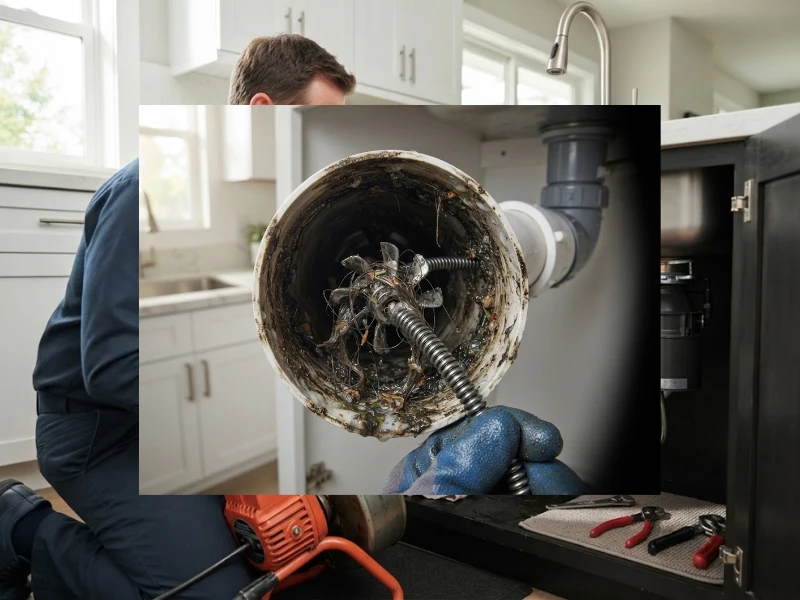
Why Older Pipes Clog More Often
A drain pipe is supposed to be smooth on the inside so water and waste slide straight through. The pipes in a brand-new home are just that. The pipes in a 1920s Lincoln Park greystone are not. After decades of service, the interior walls roughen, corrode and collect layer after layer of buildup. What starts as a smooth four-inch opening can be reduced to a passage no wider than a pencil.
Older Chicago homes add a few local challenges on top of age. Many were built as two-flats and three-flats with long, flat drain runs and lots of bends to reach stacked bathrooms. Long horizontal runs drain slowly, so solids settle instead of sweeping away. Combined storm-and-sanitary sewers, common in the older parts of the city, send extra debris and, during heavy rain, extra water through the same lateral. Add original clay sewer lines that tree roots love, and you have a system that is set up to clog over and over.
The key point is that a single snaking does not change any of this. It punches a hole through the current blockage, then leaves the rough walls and remaining buildup exactly where they were. A few weeks later, grease and debris catch on that same rough surface and the drain stops up again. That is why recurring clogs are a pattern, not a coincidence.
Cast Iron, Scale and Grease Buildup
Cast iron was the standard drain material for most of Chicago's building boom, and it is an excellent pipe when it is new. The problem is what time does to it. Cast iron rusts from the inside out. The rust expands, flakes and creates a rough, pitted surface. On top of that, minerals in the water deposit as hard scale, and every load of dishwater leaves a thin film of grease. Grease meets cool pipe walls a few feet from the sink, solidifies, and grabs hold of whatever passes by.
- Rust and corrosion roughen the pipe wall and give debris something to grip.
- Scale builds up in hard-water areas and slowly narrows the opening.
- Grease and soap scum coat the walls and trap food, hair and paper.
- Sagging and offset joints create low spots where solids pool and harden.
Run hot water for 30 seconds before and after using the kitchen sink, and never pour grease, oil or coffee grounds down the drain. Small habits slow the buildup that causes recurring clogs.
The Trouble With Chemical Cleaners
Store-bought drain cleaner feels like the easy answer, but on older plumbing it often makes things worse. Most liquid cleaners are caustic, meaning they rely on a chemical reaction that generates heat. That heat is hard on already-thin cast iron and can accelerate corrosion. The chemicals can also damage rubber gaskets and flexible couplings that hold older drains together.
There is a practical problem too. A bottle of cleaner flows straight through the open part of the drain and down past the blockage, or sits on top of it without clearing the full mass. What it does not do is scour the pipe walls, so the underlying buildup is untouched. Then there is the safety issue: any caustic liquid left in the trap can splash or burn the next person who opens the drain or snakes it. For older homes, mechanical cleaning is the safer and more effective choice. Our guide to chemical drain cleaner safety covers the risks in more detail.
Snaking vs Hydro Jetting
Snaking and hydro jetting both clear a clogged drain, but they do very different jobs. Understanding the difference is the key to stopping recurring clogs.
A drain snake, or auger, is a flexible cable with a cutting head. It is excellent for punching through a solid blockage and for grabbing tree roots. It restores flow, often within minutes. What it cannot do is clean the pipe walls. A snake leaves behind the grease, scale and rust that caused the clog in the first place, which is why the drain tends to clog again.
Hydro jetting uses highly pressurized water directed through a spinning nozzle to scour the entire inside of the pipe. It strips grease, scale, soap scum and soft roots off the walls and flushes them away, restoring the pipe close to its original diameter. Because it cleans the full circumference rather than carving a channel, the results last far longer, and it is the go-to method for grease-heavy kitchen lines and recurring blockages.
| Method | What it clears | Cleans pipe walls | Best for |
|---|---|---|---|
| Hand snake | Nearby solid clogs | No | Quick, simple backups |
| Power auger | Blockages and roots | Partly | Solid blockages and roots |
| Hydro jetting | Grease, scale, roots, sludge | Yes | Recurring and grease clogs |
Standard drain cleaning is often the right first step for a single backup. Hydro jetting is the better fit when the same line has clogged repeatedly or when grease and scale are the main culprits.
Finding the Root Cause
You cannot fix a recurring clog properly until you know why it keeps happening. Sometimes the answer is heavy buildup, but sometimes it is a broken pipe, a root-filled joint or a section that has settled into a belly where water and debris pool. Clearing the same line again and again wastes money if the real issue is structural.
A sewer camera inspection settles the question. The camera travels the line and shows the condition of the pipe: how much buildup is present, whether rust or scale has narrowed it, and whether there are cracks, offset joints, roots or sagging sections. With that picture, a plumber can recommend the least invasive fix that will actually last.
If the line is sound and just heavily coated, hydro jetting usually restores it. If the pipe is cracked, collapsed or offset, the durable answer is pipe repair or replacement, using modern materials that do not rust or scale the way cast iron does. Either way, the goal is to solve the cause once rather than pay for the same clear-out every few months.
If your drains keep backing up, stop treating the symptom. Call Plumber Lincoln Park at (773) 514-3504 to schedule a camera inspection and a permanent fix.
Frequently Asked Questions
Why do my drains keep clogging in an older home?
Older Chicago homes often have cast iron or clay drain lines with rough, corroded walls. Scale, grease and debris collect on those surfaces, slowly narrowing the pipe until it clogs. Because snaking does not remove the buildup, the same clog returns every few weeks or months.
Will snaking fix a recurring drain clog for good?
Snaking clears a path through the blockage but leaves most of the buildup on the pipe walls, so the clog usually returns. Hydro jetting scours the full diameter of the pipe and removes the grease and scale that snaking leaves behind, which is why it lasts much longer.
Is it safe to use chemical drain cleaner on old pipes?
No. Caustic chemical cleaners generate heat and can accelerate corrosion in older cast iron and metal pipes. They also rarely reach the full blockage and create a burn hazard for anyone who opens the drain afterward. Mechanical cleaning is safer for older plumbing.
How do I know if my drain pipe needs to be replaced?
A sewer camera inspection shows the inside of the pipe. Signs that replacement may be needed include heavy scale, cracks, holes, offset joints, sagging sections and root intrusion. If the pipe is only coated in grease, hydro jetting may restore it without replacement.
How often should older home drains be cleaned?
Many older homes benefit from preventive drain cleaning once a year. If you have already had two or more clogs in the same line within a year, schedule a camera inspection and jetting rather than waiting for the next backup.