
What Not to Put in a Garbage Disposal
A garbage disposal is a convenience, not a garbage can. It can only handle a narrow range of soft food scraps, and putting the wrong things down the sink is the fastest way to clog a drain, jam the blades or burn out the motor. Here is the practical list of what should never go into your disposal — and what to do instead.
How a Garbage Disposal Works
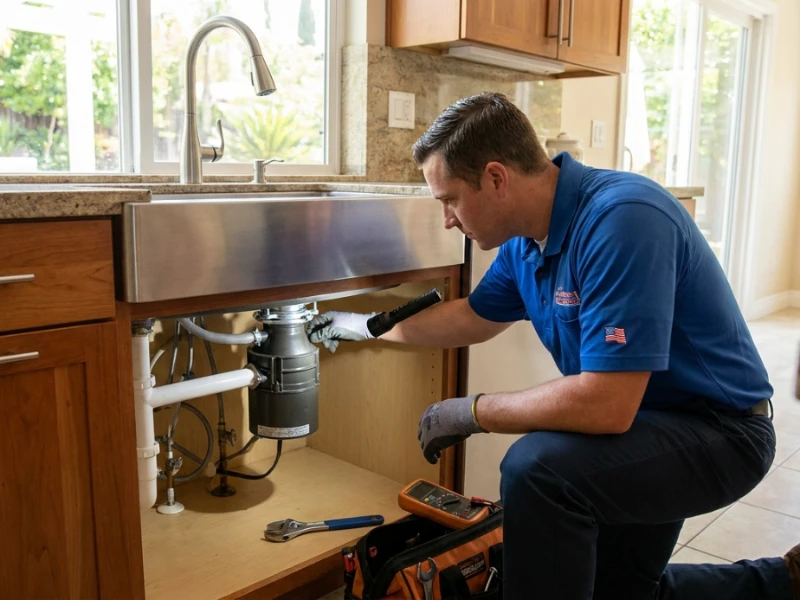
Understanding the machine makes the rules obvious. A disposal does not have razor blades that slice food into nothing. Instead, a spinning plate flings soft scraps against a stationary ring, where they break into small pieces and get flushed away by running water. There is no sharpening, no liquifying and no tolerance for hard or fibrous material.
That design sets the boundaries. Anything hard enough to stall the plate, stringy enough to wrap around it, or sticky enough to coat the drain is a problem. A disposal that is treated well can last a decade or more. One that is used as a catch-all for kitchen waste often starts humming, clogging or leaking within a few years — the classic humming but not spinning failure. And because the sink drain connects to the same pipe as the rest of the kitchen, a mistake at the disposal can back up the whole kitchen drain and beyond.
Foods to Never Put Down a Garbage Disposal
These are the items most likely to cause jams and clogs. When in doubt, compost them or put them in the trash.
- Bones and fruit pits. Chicken, pork and beef bones, plus peach, cherry, avocado and mango pits, are too hard and will jam or dull the unit.
- Fibrous vegetables. Celery, corn husks and cobs, artichokes, asparagus ends, pumpkin and squash fibers wrap around the plate and stall it.
- Coffee grounds. Small amounts are tolerable, but they settle in the P-trap and, with grease, form a dense paste that causes chronic clogs.
- Eggshells in bulk. A couple are harmless, but large quantities of shell and membrane become a gritty sludge.
- Pasta, rice and bread. These absorb water and swell into a starchy mass that seals off the drain.
- Potato peels. In quantity they turn into a thick paste that is notoriously hard to clear.
- Onion skins and layers. The thin skin slips past the plate and catches in the trap.
Even "safe" scraps overload a disposal when pushed through in large batches. Add small amounts at a time, keep cold water running, and never force food down with your hand or a utensil.
Items That Damage the Blades and Motor
Some things do not belong near a sink at all. These cause immediate damage and are often excluded from manufacturer warranties:
| Item | What happens |
|---|---|
| Metal utensils, bottle caps, foil | Jams or shatters cutters and can spark. |
| Glass, ceramic, porcelain | Hard shards dull and break the ring. |
| Shellfish shells (shrimp, crab, oyster) | Hard and stringy; jam the plate. |
| Cigarette butts, paper, cotton | Clog the trap and do not break down. |
| Drain cleaner chemicals | Corrode the unit and pose a burn risk. |
| Harsh cleaning chemicals | Damage seals and the motor over time. |
If one of these does land in the chamber, cut the power before retrieving it, and never reach in with your hand. If the unit has already jammed or is making a grinding noise, our garbage disposal repair team can clear it and check for damaged parts before they fail completely.
Grease, Oils and Fats
Grease deserves its own section because it is the single most common cause of kitchen drain clogs, and no disposal can prevent it. Cooking oil, bacon fat, butter and pan drippings are liquid when warm, which is why they seem harmless going down. Once they cool inside the pipe, they harden into a waxy coating that traps every food particle that follows.
Over weeks and months, that coating builds into a full blockage — usually deep in the P-trap or the branch line, where a plunger cannot reach. The fix is to keep fats out of the drain entirely:
- Pour cooled grease into a can or jar and throw it in the trash.
- Wipe greasy pans and plates with a paper towel before washing.
- Never pour hot oil down the sink, even with the disposal running.
- If a drain already runs slow, treat it as a warning sign and call for professional drain cleaning before it backs up.
Best Practices for a Long-Lasting Disposal
Good habits stretch the life of the unit and keep your plumbing clear. Follow these basics every time you use it:
- Run cold water first. Start the water, then the disposal, and let both run 10–15 seconds after grinding stops. Cold water keeps fats solid so they wash away.
- Feed it slowly. Add small amounts rather than a full plate at once.
- Keep it clean. Grind a few ice cubes with a little coarse salt, or a small piece of citrus peel, to freshen the chamber. Skip chemical drain cleaners.
- Know the reset button. If the motor overloads, the red reset button on the bottom pops out. Press it back in after the unit cools.
- Listen for changes. New noises, slow draining or a persistent smell mean it is time for service.
Following this list prevents most disposal failures, but equipment still wears out. If your unit hums, leaks, trips the breaker or simply will not turn, call Plumber Lincoln Park at (773) 514-3504. We repair and replace disposals and clear the kitchen drains they feed, so a small problem never becomes a flooded cabinet.
Frequently Asked Questions
Can I put coffee grounds in a garbage disposal?
Small amounts are usually fine, but coffee grounds are a leading cause of kitchen drain clogs. They settle in the P-trap and combine with grease into a dense paste. Compost them or put them in the trash instead.
Why is grease bad for a garbage disposal?
Grease is liquid when warm but solidifies as it cools inside the pipe. The coating traps food and builds up until the pipe narrows and clogs. Even a strong disposal cannot push solid fat through the line.
Are eggshells safe for a garbage disposal?
A few eggshells are harmless, but in volume the shell dust and membrane create a gritty sludge that settles in drains. Do not send a dozen shells down at once.
What should I run through the disposal to clean it?
Run cold water and grind small amounts of citrus peel, or a handful of ice cubes with coarse salt, to freshen and scour the chamber. Avoid chemical drain cleaners, which can damage the unit and pipes.
Does putting the wrong things down the disposal void my warranty?
Many warranties exclude damage from misuse, including bones, fibrous foods, shellfish shells, glass, metal and large amounts of grease. Following the manufacturer's list helps protect both the disposal and its warranty.