
Garbage Disposal Humming but Not Spinning? Here's Why
Flip the switch, hear a low hum, and nothing moves — that familiar buzz is one of the most common garbage disposal complaints. The good news is that a humming disposal is usually a simple jam you can clear in a few minutes. The key is knowing what the sound tells you and how to free the unit without hurting yourself or your plumbing.
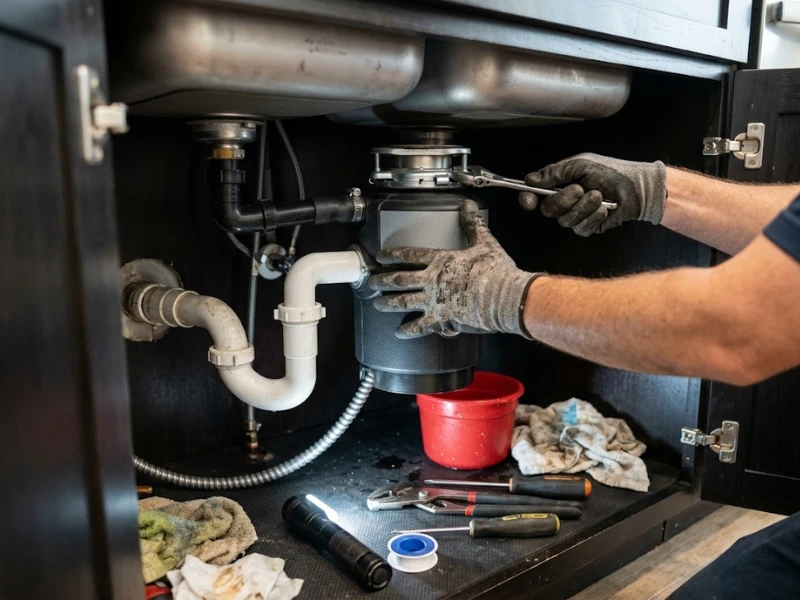
Why Disposals Hum Without Spinning
A garbage disposal is a surprisingly simple machine. An electric motor spins a grinding plate (also called a flywheel) fitted with swiveling cutters. Food falls into the grinding chamber, the plate slings it against a stationary shredder ring, and the shredded waste is washed out through the drain. When you hear a hum but see no movement, the motor is energized and trying to turn, but the plate itself cannot rotate.
That single symptom points to a short list of causes:
- A jam in the chamber. The most common cause by far. A chicken bone, fruit pit, utensil or wad of fibrous food is wedged between the plate and the shredder ring, locking it in place.
- An overloaded motor. The motor drew too much current fighting the jam and tripped its internal thermal overload, so it hums weakly without turning.
- A failed motor or capacitor. If the rotor is seized or the start winding has failed, the unit will hum and never spin no matter how many times you reset it.
Nearly every humming disposal starts as a jam. Left alone, that jam can burn out the motor, which is why it pays to act quickly and methodically. The mistakes people make are using too much force, reaching into the chamber, or repeatedly hitting the switch hoping it will clear — all of which can turn a five-minute fix into a replacement. If you have already tried the basics without success, our garbage disposal repair team can diagnose it in person.
Safety First: Cut the Power
Before you touch anything inside the disposal, the power has to be completely off. Disposals are wired to a wall switch, but many kitchens also have the unit on a dedicated breaker. Rely on both.
Even with the wall switch off, a disposal can be accidentally switched on by someone else — and some units are double-fed. Always kill the breaker, unplug the disposal if it has a cord, and use tools, not your hands, to clear the chamber.
- Turn the disposal's wall switch to OFF.
- Go to your electrical panel and switch off the breaker that feeds the kitchen disposal.
- If the unit has a plug under the sink, unplug it as a final safeguard.
- Tell everyone in the home not to touch the switch while you are working.
If the disposal is hard-wired and you cannot identify the correct breaker, stop and call a licensed plumber or electrician. Working around water and live wiring is not worth the risk.
How to Free a Jammed Disposal
With the power off, look into the chamber using a flashlight — never your fingers. A pair of long-nose pliers or tongs can lift out the obstruction if you can see it. Common culprits include:
| Jam culprit | Why it locks the plate |
|---|---|
| Bones and fruit pits | Hard and irregular, they wedge between the plate and shredder ring. |
| Spoon, bottle cap, utensil | Metal jams the cutters almost instantly. |
| Fibrous food (celery, corn husks) | Strings wrap around the plate and stall it. |
| Coffee grounds, eggshells (in bulk) | Packing into a dense sludge that grips the plate. |
If you can see and grab the obstruction with pliers, remove it and move on to resetting the unit. If nothing is visible or you cannot reach it, you will need to free the plate from underneath with a wrench — the step most homeowners miss.
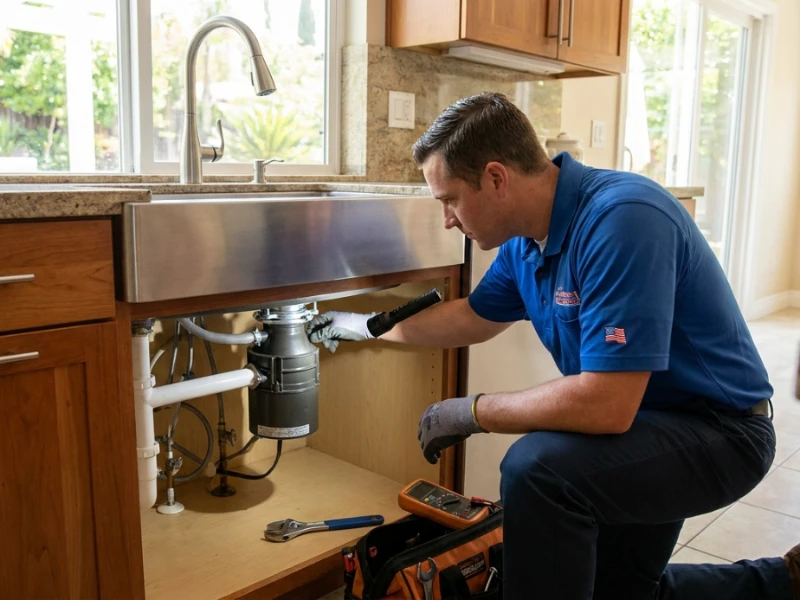
The Reset Button and Hex Wrench
This is the reliable way to clear a jam that you cannot see. Every disposal has a hex socket on the bottom of the unit, sized for a 1/4-inch Allen or hex wrench. Some manufacturers include a dedicated wrench; if yours is lost, a standard 1/4-inch hex key works.
- Confirm the power is off at both the switch and the breaker.
- Insert the hex wrench into the socket on the bottom of the disposal.
- Rock the wrench firmly back and forth in both directions. You will feel the plate break free as it turns.
- Once it rotates a full turn, remove the wrench and look inside for the freed debris, then remove it with pliers.
- Find the small red or black reset button on the bottom of the unit and press it firmly until it clicks.
- Restore power and run cold water through the disposal before switching it on.
A few points separate a successful fix from a costly mistake. Use the correct wrench and steady pressure — never pliers on the shaft, which rounds the socket and damages the flywheel. If the plate will not budge after reasonable effort, the obstruction is too deep or the motor is seized. Stop before you break something. For stubborn jams and for any electrical concern, our plumbing repair team can step in.
Run cold water for 10–15 seconds before, during and after grinding. Cold water keeps fats solid so they wash away instead of coating the chamber. To keep jams from coming back, review what not to put in a garbage disposal.
When to Repair or Replace
Not every humming disposal is savable, and knowing when to stop is important. Consider repair versus replacement based on these signs:
- Still hums after clearing and resetting. The motor or capacitor has likely failed. Repair often costs most of the price of a new unit.
- Repeated breaker trips. An electrical fault or failing motor, which needs professional attention.
- Grinding or metal-on-metal noise. Broken cutters or debris in the chamber; on older units, a good sign it is time to upgrade.
- Leaks from the housing. A corroded body cannot be sealed reliably and should be replaced.
- Burn smell or visible scorching. Stop using it immediately and call for service.
Age matters too. Most disposals last roughly 8 to 12 years. If yours is a builder-grade unit at the end of that range and it keeps jamming, replacement is usually the smarter spend. As a general rule, if a repair costs more than about half the price of a new disposal, replace it. It also helps to know the unit's brothers and sisters are not the only appliance that wears out — our general plumbing repair service covers everything from disposals to faucets. If you would like a straight recommendation, call us at (773) 514-3504 and we will tell you whether a repair or a replacement makes more sense.
Frequently Asked Questions
Why does my garbage disposal hum but not spin?
A hum means the motor has power but the grinding plate cannot rotate. The usual cause is a jam — a bone, fruit pit, utensil or fibrous food wedged between the plate and the shredder ring. Clear the obstruction and the plate spins freely again.
Can I fix a jammed garbage disposal myself?
Yes, if it is only jammed. Cut the power at the breaker, insert a 1/4-inch hex wrench into the bottom socket and rock it until the plate frees, then press the red reset button. Never reach into the grinding chamber with your hand.
Where is the reset button on a garbage disposal?
It is a small red or black button on the bottom of the unit near the cord. When the motor overloads, the button pops out. Let it cool for a few minutes, press until it clicks, restore power and try again.
Is it safe to use a wrench on my disposal?
Only with the power fully off, and only the correct 1/4-inch hex wrench in the socket at the bottom. Rock it gently. Pliers or screwdrivers can damage the flywheel and motor shaft.
When should I call a plumber instead of fixing it myself?
Call a plumber if the disposal still will not turn after clearing and resetting, if it trips the breaker repeatedly, if you hear grinding, if it leaks, or if you smell burning. These signal a failed motor, worn parts or an electrical fault.