
Water Heater Runs Out of Hot Water? Causes and Fixes
Few things disrupt a morning faster than stepping into a shower that turns cold after five minutes. When your water heater runs out of hot water, the cause is usually something specific — and often fixable. This guide explains how your water heater works, why the hot water runs short, and what it takes to get reliable hot water back.
How Your Water Heater Makes Hot Water
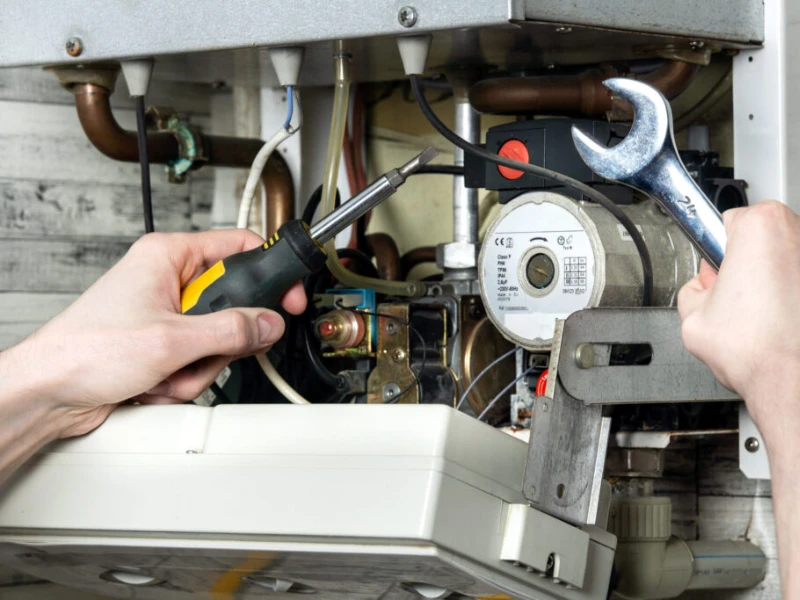
Understanding the basics makes the symptoms easier to read. A storage-tank water heater holds a set volume of water — commonly 40 to 50 gallons in a Chicago home — and keeps it at a target temperature around 120°F. A thermostat monitors the water, and when the temperature drops, the burner (gas) or heating elements (electric) fire up to reheat the tank.
Two numbers govern how much hot water you get. The tank capacity is how much hot water is ready at any moment. The recovery rate, measured in gallons per hour, is how quickly the unit reheats after you use that water. If either the capacity is reduced by sediment or the recovery rate slows because of a failed part, you feel it immediately as a shorter shower.
Electric units typically have an upper and lower heating element, each with its own thermostat. Gas units rely on a burner, a thermocouple or igniter, and a flue for exhaust. A tankless unit skips storage entirely: it heats water on demand as it flows through a heat exchanger, so it never technically "runs out" — but it can be overwhelmed, scaled up, or undersized for your demand.
Common Causes of Low Hot Water
When the hot water quits early, one or more of these issues is usually to blame.
- Sediment buildup. Minerals in Chicago-area water settle on the tank floor. That layer insulates the water from the burner or element, slowing recovery and shrinking usable capacity. It also causes the popping and rumbling many homeowners notice.
- Failed lower heating element (electric). If the bottom element burns out, only the upper portion of the tank heats, so you get a few gallons of hot water and then nothing.
- Faulty thermostat. A thermostat stuck too low, or reading inaccurately, stops the unit from keeping up with demand.
- Broken dip tube. This plastic tube delivers cold water to the bottom of the tank. If it cracks, cold water mixes with the hot at the top, cutting your supply short.
- Undersized tank. A 40-gallon tank in a busy household with back-to-back showers will always struggle, no matter how well it works.
- High-demand habits. Long showers, large soaking tubs, simultaneous laundry and dishwashing, or a new low-flow fixture change can all outpace the unit.
- Tripped breaker or gas issue. On electric models, a tripped breaker kills one or both elements; on gas models, a dirty burner or failed igniter reduces heating.
If your hot water lasts only a few minutes and the tank is electric, a failed lower element is a strong suspect. If it fades gradually over months, sediment is the more likely culprit. If your unit rumbles, see our guide to water heater popping noises.
Tank vs Tankless Differences
The two systems "run out" for different reasons, which changes how you troubleshoot them. With a tank, running out is usually about recovery and capacity. With tankless, it is almost always about flow rate and heat-exchanger condition. Our detailed comparison, tank vs tankless water heater, walks through the trade-offs, but here is the short version.
| Symptom | Likely cause in a tank | Likely cause in tankless |
|---|---|---|
| Hot water fades after minutes | Sediment, bad element, or broken dip tube | Unit undersized or scaled heat exchanger |
| Temperature fluctuates | Thermostat or gas burner issue | Flow rate exceeding capacity |
| Recovery is slow | Sediment insulation or small burner | Cold inlet temperature in winter |
| Never truly "runs out" but weak | Not typical | Multiple fixtures used at once |
Tankless units also have a minimum and maximum flow rate. Use too little water and the unit may not activate; use too much at once and the outgoing temperature drops. Winter inlet water in Chicago is much colder, which demands more heating power to reach the same setpoint.
Fixes and Maintenance
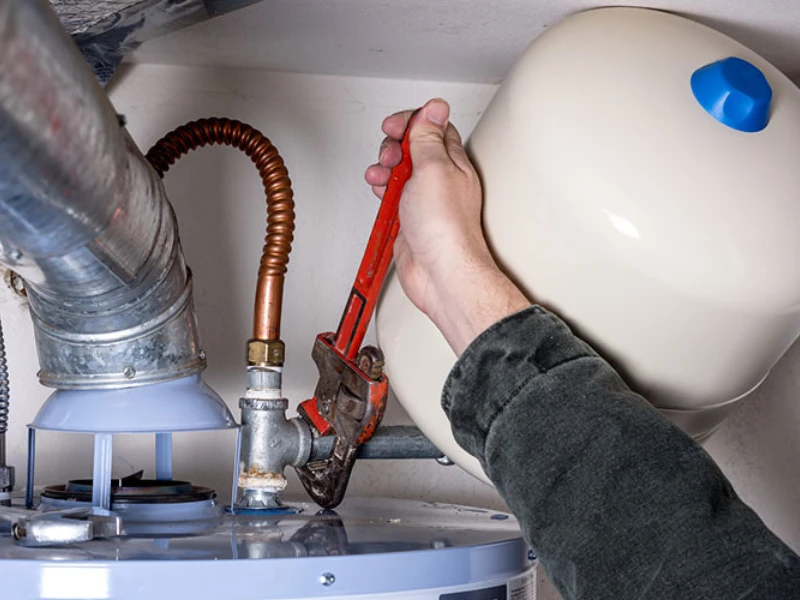
Some fixes are simple; others belong in the hands of a licensed plumber. Start with the safe, no-tools checks, then bring in a professional for anything involving the tank, gas or wiring.
- Check the thermostat setting. Confirm it is set to about 120°F. A setting accidentally lowered to 100°F will feel like the unit has failed.
- Reset the breaker. For electric units, look for a tripped breaker or a red reset button on the upper thermostat. If it trips again, stop and call for water heater repair.
- Flush the tank. An annual flush drains sediment through the drain valve and restores recovery. If you have never flushed an older tank, let a pro do the first one — sediment can clog the valve and old tanks can leak afterward.
- Test the elements and thermostats. A multimeter check confirms whether a heating element or thermostat has failed. Replacements are inexpensive but require shutting off power and draining the tank.
- Replace a broken dip tube. This common failure is easy to fix once diagnosed and immediately restores full hot water capacity.
Never work on an electric water heater without cutting power at the breaker, and never open a gas water heater's burner or flue components yourself. If you see water, rust or soot around the unit, call a professional immediately. A leak from the bottom is especially serious — see water heater leaking from the bottom for why.
For ongoing reliability, schedule a yearly tune-up. A plumber will flush the tank, test elements and thermostats, check the anode rod and inspect the pressure-relief valve. This routine is the cheapest insurance against a mid-shower cold surprise. Our team covers this in our water heater repair service and can also handle a full water heater installation if your unit is past saving.
When to Repair or Replace
The decision comes down to age, condition and cost. Use these guidelines:
- Repair if the tank is under eight years old and the issue is a single, identifiable part such as an element, thermostat, dip tube or gas valve.
- Consider replacement if the tank is over ten years old, has a rusty or leaking shell, or if repairs are piling up. Most storage tanks last roughly 8 to 12 years.
- Replace if the unit cannot keep up even after maintenance and flushing — the fix is often to size up, not patch.
If you are weighing a repair against a full swap, our article water heater repair vs replacement breaks down the cost math. When there is simply no hot water at all, that is a different urgency — our no hot water service handles total failures, and we can help you choose a right-sized tank or tankless replacement rather than guessing at the store.
Frequently Asked Questions
Why does my water heater run out of hot water so quickly?
The most common causes are sediment buildup on the tank floor, a failed lower heating element, a thermostat set too low, a broken dip tube, or a tank that is simply too small for your household. A plumber can diagnose which one is affecting you in a single visit.
How long should hot water last in a tank water heater?
A well-maintained 40 to 50 gallon tank provides roughly 30 to 45 minutes of continuous hot water for a shower and recovers in about 30 to 60 minutes. If you lose hot water in a few minutes, a part has likely failed.
Can I fix a water heater that runs out of hot water myself?
You can safely adjust the thermostat and reset a tripped breaker. Flushing sediment and replacing elements, thermostats or dip tubes involve water, electricity or gas and are best handled by a licensed plumber.
Does flushing a water heater really restore hot water?
Often, yes. Sediment insulates the water from the heat source, so removing it improves recovery and restores capacity. Annual flushing is one of the simplest ways to extend a tank's life.
Should I repair or replace a water heater that keeps running out?
If the tank is under eight years old and one part is at fault, repair usually makes sense. If it is older, leaking, rusty or repeatedly failing, a right-sized replacement is the better investment.