
Tank vs. Tankless Water Heater: Which Is Right for You?
Tank or tankless? It is one of the most common questions we hear from Chicago homeowners shopping for a new water heater. Both styles deliver hot water, but they differ sharply in upfront cost, efficiency, space needs and how they handle demand. Here is an honest comparison to help you choose.
How Tank Water Heaters Work
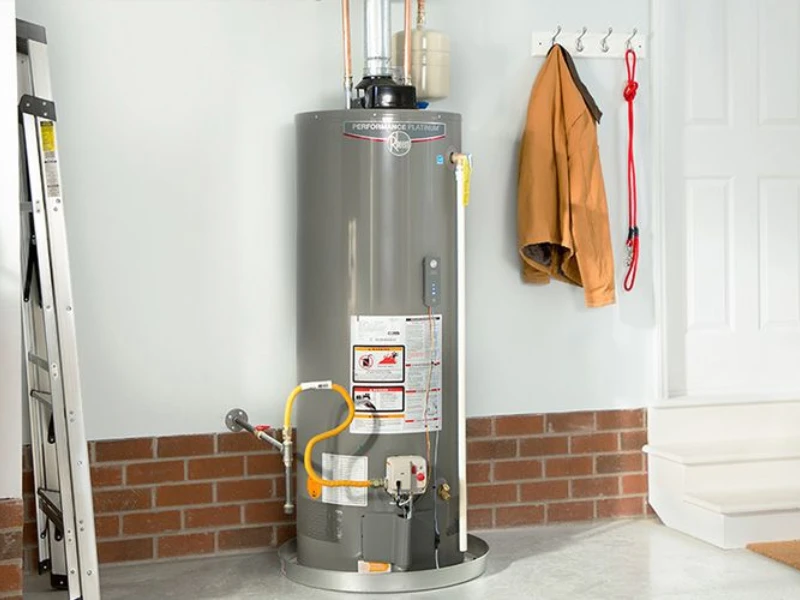
A conventional tank water heater stores 40 to 80 gallons of hot water in an insulated steel cylinder, keeping it at a set temperature around the clock so it is ready the moment you turn on a tap. A gas burner or electric heating elements reheat the water as it cools and recovers after each use. Because the supply is sitting there already hot, you get instant hot water at the fixture — but you also pay to keep that tank warm even when nobody is using it.
Tanks are the tried-and-true choice for good reason. They cost less to buy and install, replacement parts are widely available, and any licensed plumber can service them. The trade-offs are the steady standby heat loss, a larger physical footprint, and a finite supply: once the tank empties, you wait for it to recover. When a tank refuses to heat or runs out fast, it often needs a water heater repair rather than a full replacement.
How Tankless Water Heaters Work
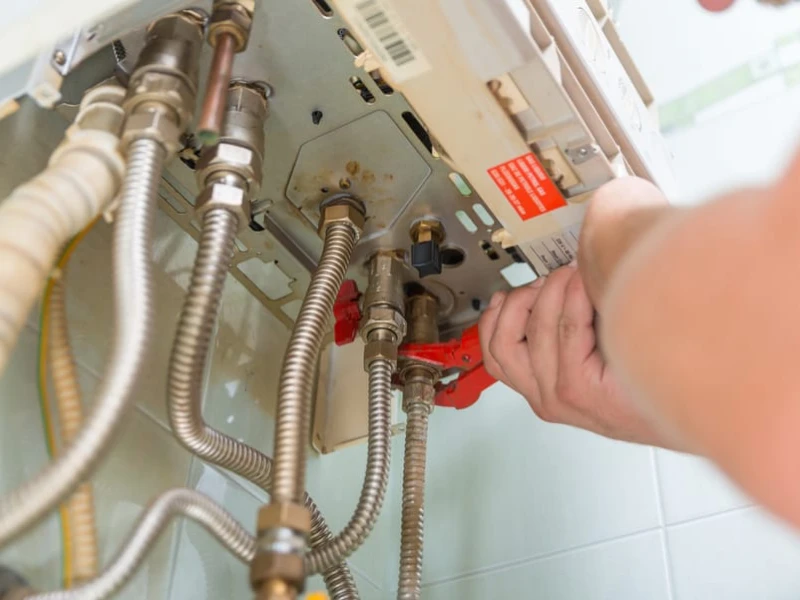
A tankless, or on-demand, water heater has no storage tank. Cold water flows through a heat exchanger, where a powerful gas burner or electric element heats it as it passes. Because there is no standing reservoir, there is no standby heat loss, and the unit never "runs out" of hot water in the conventional sense — it keeps heating for as long as water is flowing, up to its maximum flow rate.
The benefits are real: tankless units are compact, wall-mounted and typically last up to 20 years, roughly double the life of a tank. They also tend to be more energy efficient because they only heat water when you need it. The catch is that they demand more from installation. Gas models often require a larger gas line and a dedicated vent, electric models may need upgraded wiring, and hard Chicago water makes annual descaling important to protect the heat exchanger from mineral buildup.
Tankless units reward good care. Flushing the heat exchanger once a year removes scale from hard water and is the single biggest factor in reaching that 20-year lifespan. Skip it, and efficiency and reliability both suffer.
Upfront Cost vs. Long-Term Savings
Tankless water heaters cost more to buy and considerably more to install, so the savings accrue over time rather than on day one. A standard tank typically costs less upfront, but it burns energy around the clock and usually needs replacing a decade or so later.
| Factor | Tank | Tankless |
|---|---|---|
| Upfront cost | Lower | Higher |
| Installation | Simpler | More complex (venting, gas, wiring) |
| Energy efficiency | Good | Higher |
| Expected lifespan | 8–12 years | Up to 20 years |
| Standby heat loss | Yes | None |
| Hot water supply | Limited by tank size | Endless within flow rate |
In practice, many homeowners save roughly 20 to 30 percent on water heating energy with tankless, though the exact figure depends on usage. Because installation can add substantially to the price — new venting, gas line upsizing or electrical work are common — payback usually takes several years. If you plan to stay in your home long term, the math favors tankless; if you may move soon, a tank is often the more practical spend. For a deeper look at when a unit is worth replacing at all, see our comparison of water heater repair versus replacement.
Hot Water Demand and Sizing
Sizing is where tank and tankless really diverge, and it is the most common reason a new water heater disappoints. Tanks are sized by capacity in gallons and recovery rate, while tankless units are sized by flow rate — how many gallons per minute they can heat to a set temperature rise.
To size either type, add up your simultaneous demand. A shower might use around 2 gallons per minute, a bathroom faucet under 1, a dishwasher 1 to 2, and a washing machine 2 to 3. Running two showers plus laundry and a dishwasher at once can add up fast. A tank handles that by simply draining its reserve; a tankless unit must be able to keep pace in real time or the water cools. This is why a single tankless unit can feel like it never runs out of hot water for one shower but struggles when three fixtures run together.
If you frequently run out of hot water today, that is a demand problem. Learn the common reasons a unit runs out of hot water before simply buying a bigger tank — sometimes the fix is a repair, and sometimes it is better sizing.
Which Is Right for Your Home?
There is no universally correct answer — only the right answer for your household, budget and building. Consider these scenarios:
- Choose a tank if: your budget is tight, you want the lowest installed cost, your space allows a conventional tank, and your usage is moderate and predictable.
- Choose tankless if: you want endless hot water, value efficiency and a long lifespan, have limited floor space in a condo or small home, and are comfortable with a higher upfront investment.
- Consider a hybrid heat-pump tank if: you want efficiency without the flow-rate limits, and you have a space that stays warm enough for the heat pump to work well.
- Consider multiple tankless units if: your home has high simultaneous demand, such as a large family or multiple bathrooms used at once.
Whichever way you lean, correct installation makes or breaks performance. A licensed plumber will confirm gas line capacity, venting, electrical requirements and clearances, and register your warranty. Our water heater installation team handles both tank and tankless systems across Lincoln Park and the North Side, and we will tell you honestly which one fits your home rather than upselling you on the pricier option.
Frequently Asked Questions
Is a tankless water heater worth it?
A tankless water heater is worth it if you value endless hot water, a long lifespan and space savings, and you plan to stay in your home long enough to recoup the higher upfront cost through energy savings. For a single occupant who rarely uses hot water, a standard tank may be more practical.
How long do tank and tankless water heaters last?
A standard tank lasts about 8 to 12 years, while a tankless unit can last up to 20 years with annual descaling. That longer life helps tankless models cost less over time despite a higher purchase price.
Does a tankless water heater save money?
Tankless units are generally more energy efficient because they heat water on demand instead of keeping a tank hot 24 hours a day. Depending on usage, homeowners may save around 20 to 30 percent on water heating energy, though the larger upfront and installation costs mean payback takes several years.
Can a tankless water heater run out of hot water?
A single tankless unit provides endless hot water for one fixture at a time, but it can struggle with simultaneous high demand, such as two showers running while the dishwasher and washing machine are also in use. Proper sizing and sometimes multiple units solve that.
How much space does a tankless water heater save?
Tankless units are roughly the size of a small suitcase and mount on a wall, freeing up the large closet or floor space a tank occupies. That makes them attractive in Chicago condos and homes where square footage is at a premium.
Which water heater is better for a large family?
A large family often benefits from a tankless unit sized to its peak demand, or from a high-capacity tank. If several people shower back to back every morning, a properly sized tankless system or a larger recovery-rate tank prevents the cold showers a small tank would cause.