
7 Warning Signs of a Damaged Sewer Line
A damaged sewer line rarely fails without warning. Slow drains, sewage odors and soft spots in the yard are the early clues most homeowners miss until wastewater backs into the basement. Learning to read these seven signs helps you act before a small defect turns into an emergency.
Warning Signs Inside Your Home
Interior symptoms are usually the first thing a homeowner notices, and they are often dismissed as a simple clog. When several of them appear together, the problem is more likely to be in the main line than in a single fixture. Here are the indoor red flags to watch for.
1. Slow Drains Throughout the House
One slow drain is usually a local clog. When the kitchen sink, bathtub, shower and toilets all drain sluggishly at the same time, the blockage or break is almost certainly in the main sewer line that carries waste away from your home. Because every fixture shares that line, damage there slows everything at once. If plunging or a quick over-the-counter treatment does not help, professional drain cleaning can clear what is reachable, but repeated clogs often point to a structural defect that cleaning alone cannot fix.
2. Sewage Odors Indoors and Outdoors
A persistent rotten-egg or sulfur smell is one of the clearest signs of a damaged line. If a pipe is cracked or has pulled apart at a joint, sewer gas escapes instead of venting safely through your roof stack. You may notice the smell near floor drains, in the basement, or in a bathroom that is rarely used. Odors outside near the yard, especially close to the foundation, can mean the line is leaking into the soil.
3. Repeated Backups and Overflowing Fixtures
Occasional clog is normal. Wastewater rising in the lowest drain in the house — often a basement floor drain, laundry sink or shower — is not. That is a classic sign that the main line is blocked, collapsed or sagging, and it is the symptom most likely to cause real water damage. When a backup contains waste rather than clear water, stop using water immediately and treat it as a health hazard.
4. Gurgling Toilets and Drains
Bubbling sounds from a toilet after you run the washing machine or take a shower are caused by air trapped in the line. That trapped air has nowhere to go because the pipe is partially blocked or damaged. Gurgling is an early warning, not a harmless quirk, and it usually appears before an actual backup.
If raw sewage is entering your home, avoid contact, keep children and pets away, and do not keep flushing or running water. Call a licensed plumber for emergency sewer line repair rather than trying to clear it yourself.
Warning Signs Outside Your Home
Some of the strongest evidence of a failing sewer line is in your yard and around your foundation. These outdoor signs often show up after the indoor ones, which is why they should never be ignored.
5. Soggy Patches and an Unusually Green Lawn
Sewage is rich in nutrients, so a leaking line often fertilizes the soil above it. Look for a strip of grass that stays greener, thicker or soggy even in dry weather, or a sunken trench-shaped depression tracing the path of the pipe. Standing water that refuses to drain could also be a broken line saturating the soil underneath.
6. Cracks in the Foundation or Settlement
A leaking sewer line can undermine the soil beneath your home. As the ground shifts, you may see new cracks in foundation walls or floors, doors and windows that no longer close properly, or a noticeable slope in an interior floor. These are serious structural symptoms that almost always need professional attention.
7. Pest and Rodent Activity
Rats, mice and insects are drawn to the moisture and waste escaping from a broken pipe. A sudden increase in rodents, especially around the foundation or in the basement, can indicate an opening in the sewer line that they are using as a doorway. Pest activity often accompanies the odor and soggy-ground signs above.
Why Sewer Lines Fail
Sewer lines do not last forever. Understanding the cause helps you and your plumber choose the right fix. In older Chicago neighborhoods, three factors come up again and again.
- Tree roots: Roots are attracted to the moisture and nutrients in a sewer line and can enter through the smallest joint or crack, then expand until they block the pipe. Learn more in our guide to tree roots in sewer lines.
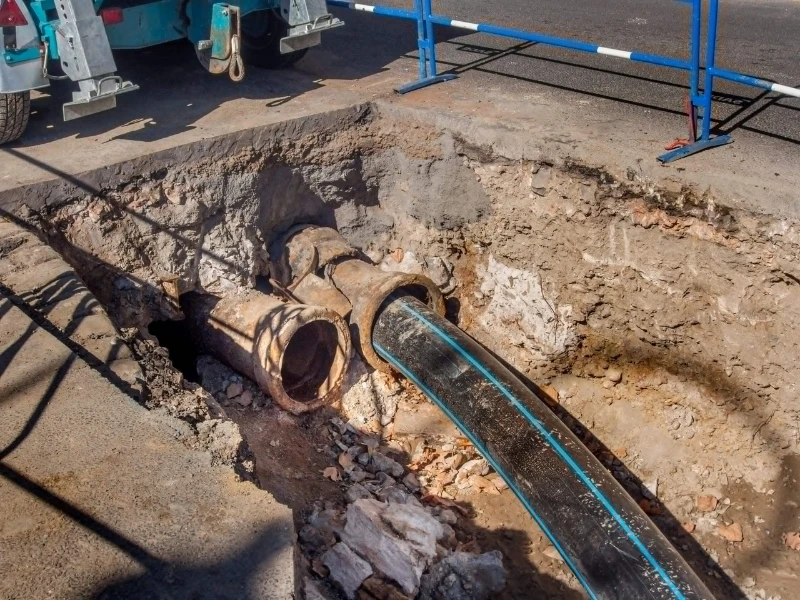
- Age and pipe material: Clay tile, cast iron and obsolete materials like Orangeburg were never designed to last a century. They crack, corrode, scale up and eventually collapse.
- Ground movement and settling: Shifting soil can offset joints, create bellies where waste pools, or shear the pipe entirely.
- Grease, wipes and debris: Repeated buildup inside the pipe increases pressure on already weakened walls and accelerates failure.
| Symptom | What it often means |
|---|---|
| Multiple slow drains | Main line blockage or partial break |
| Sewage odor indoors | Cracked pipe or failed joint |
| Backups in the lowest drain | Collapse, sag or heavy root intrusion |
| Soggy or extra-green lawn | Leaking line saturating the soil |
| Foundation cracks | Soil settlement from a chronic leak |
What to Do If You Spot the Signs
If one or more of these warning signs sounds familiar, do not wait for the line to fail completely. Taking a few calm steps now can prevent thousands of dollars in water damage and landscaping.
- Stop using water. Limit showers, laundry and flushing to reduce the chance of a backup while you arrange service.
- Do not reach for harsh chemicals. Corrosive drain cleaners can further damage an already weakened pipe.
- Document anything you see. Photos of backing-up drains, soggy patches or cracks help your plumber and your insurer.
- Get a camera inspection. A sewer camera inspection pinpoints the exact location and cause of the problem so the repair is targeted.
- Discuss repair options. Depending on the damage, you may need a spot repair or a larger job. Our comparison of sewer line repair vs. replacement explains how to decide.
Schedule a drain and sewer check every year or two, especially in older homes with clay or cast-iron laterals. Catching root intrusion early lets you clear the line instead of repairing it.
When you need a plumber you can trust in Lincoln Park and across Chicago's North Side, our licensed team can inspect, diagnose and repair your sewer line quickly. Call (773) 514-3504 to schedule service.
Frequently Asked Questions
How do I know if my sewer line is damaged?
The most reliable signs are multiple slow drains, sewage odors indoors or in the yard, repeated backups, gurgling fixtures, soggy or extra-green lawn patches, foundation cracks and sudden pest activity. A sewer camera inspection is the only way to confirm the exact location and cause.
Can a damaged sewer line fix itself?
No. A cracked, offset or root-invaded line only gets worse. Small defects let soil and debris in and roots grow back stronger, so early repair is almost always cheaper than waiting for a full collapse.
How much does sewer line repair cost in Chicago?
Cost depends on the cause, depth and length of the repair. Minor spot repairs and drain cleaning cost far less than replacing a section of line, and trenchless methods usually cost less than a full excavation. A camera inspection lets us quote accurately before any work begins.
Does homeowners insurance cover sewer line damage?
Standard policies rarely cover the line itself because it is usually considered exterior to the home. Some policies offer a service line endorsement, and interior damage from a sudden backup may be covered if you added water or sewer backup protection. Check your policy before assuming.
How long does a sewer line repair take?
A spot repair or small section replacement can often be finished in a single day. Traditional full replacements that require excavation usually take two to four days, while trenchless repairs are typically faster and far less disruptive to your yard.