
Sewer Line Repair vs. Replacement: Which Do You Need?
When a sewer line fails, the biggest question is rarely whether it needs attention — it is whether a spot repair will hold or the entire line should be replaced. The right answer depends on the type, location and extent of the damage. This guide walks you through how to decide.
Repair vs Replacement: The Basics
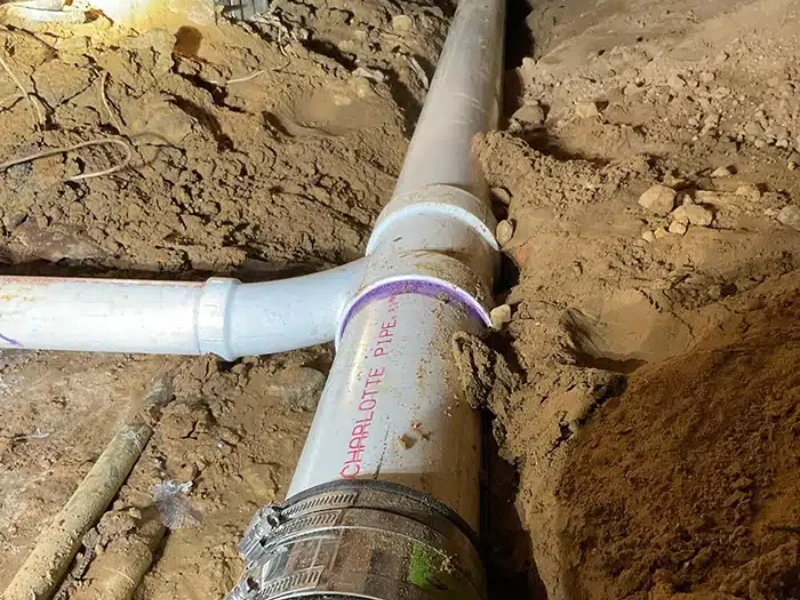
Think of it as the difference between fixing a pothole and repaving a road. A repair addresses a specific defect in an otherwise healthy pipe — a crack, a small offset, a section crushed by a root. A replacement removes and reinstalls all or a large portion of the line, usually because the pipe has failed in multiple places or is simply at the end of its useful life.
The deciding factor is not the size of the current problem on its own. It is the overall condition of the line and the likelihood of more failures in the near future. A twenty-foot clay pipe with one small root intrusion is a repair candidate. The same pipe with root intrusion every few feet, several cracks and a belly is a replacement candidate, because patching one spot only postpones the next breakdown by a season or two.
This is why a sewer camera inspection comes before any decision. Video footage shows the full run of the pipe, not just the most recent blockage, so you and your plumber can judge the whole line instead of reacting to one symptom. If you are still sorting out symptoms, start with our guide to the warning signs of a damaged sewer line.
Signs Repair Is Enough
A targeted repair is often the smartest, most economical choice — but only when the damage is genuinely isolated. Repair tends to make sense when:
- The pipe is otherwise in good condition. The camera shows sound walls and properly aligned joints on both sides of the problem.
- There is a single, localized defect. One crack, one small offset or one small root entry that a sleeve or spot fix can fully address.
- The line is not near the end of its life. Modern PVC or newer cast iron that has decades of service left.
- The problem is accessible. A shallow, easy-to-reach section keeps the repair simple and affordable.
- The underlying cause is treatable. A clog, a small root intrusion or a minor crack rather than structural collapse.
For a simple blockage or built-up grease and scale, the answer may not even be a repair at all — professional drain cleaning or hydro jetting may restore full flow without touching the pipe itself. See our guide to sewer camera inspections to understand how the diagnosis is made.
If the plumber says a repair is enough, ask what condition the rest of the line is in. If they cannot show you the full video and explain why the other sections are sound, get a second opinion before committing.
Signs You Need Replacement
Replacement is the harder recommendation to hear, but it is also the one that prevents repeat failures and repeated bills. Consider replacement when the inspection reveals any of the following:
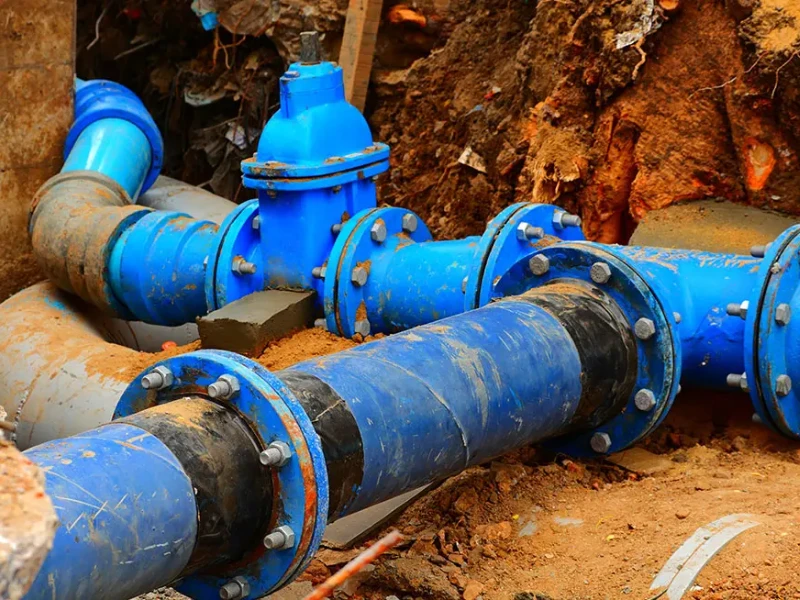
- Widespread cracking or multiple defects. Damage in several places means the pipe is failing as a system, not at one weak point.
- Recurring root intrusion. If roots keep coming back after clearing, a new, root-resistant pipe is the permanent fix. Learn more in our article on tree roots in sewer lines.
- Collapse, bellies or severe offsets. Sections that have dropped or sheared cannot be patched back to reliable service.
- Obsolete materials. Clay tile, Orangeburg and heavily corroded cast iron rarely justify investing in another patch.
- A very old line with chronic problems. When you have paid for clog after clog, the math increasingly favors replacement.
In these cases, a short-term repair usually cost more over a few years than one upfront replacement. Investing once in a modern, root-resistant line ends the cycle.
Trenchless vs Traditional Replacement
If replacement is the answer, there is a second decision: how to do it. Traditional open-cut replacement digs a long trench along the entire path of the pipe. It is straightforward and works in most conditions, but it can destroy lawns, driveways, patios and landscaping, and it takes longer to complete.
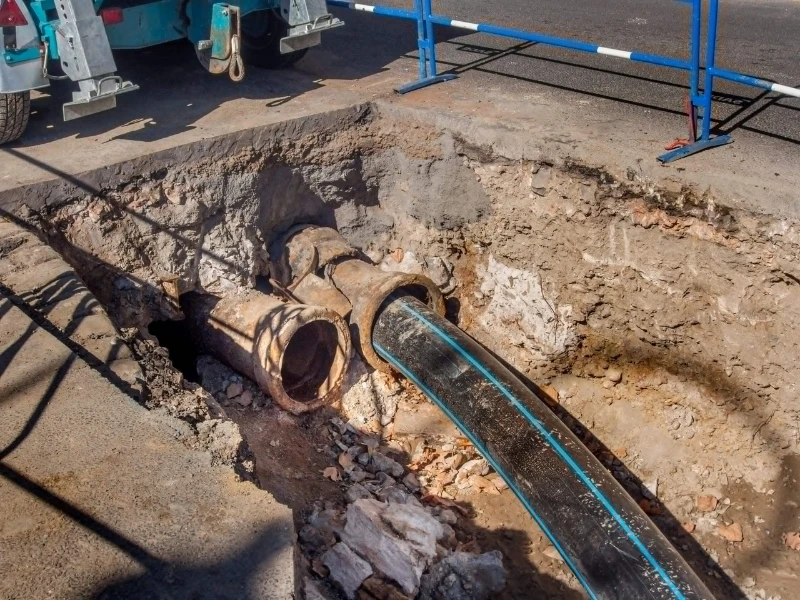
Trenchless replacement avoids most of that disruption. Two common approaches are pipe bursting, which pulls a new pipe through the old one while fracturing it outward, and cured-in-place lining, which creates a new pipe inside the existing line. Both require only small access pits rather than a continuous trench. Trenchless methods are usually faster, gentler on your property and increasingly the first choice for urban lots in Chicago where space is tight.
| Factor | Traditional | Trenchless |
|---|---|---|
| Digging | Long continuous trench | Small access pits only |
| Yard and driveway | Major disruption | Minimal disruption |
| Typical timeline | Several days | Often one to two days |
| Best for | Severe collapses, deep utility conflicts | Most straight runs with good access |
Not every line is a trenchless candidate. Sharp bends, certain collapses and some material types may rule it out, which is another reason a thorough inspection comes first. Our team offers sewer line repair and can explain which method fits your property.
Cost and Lifespan Considerations
Cost is not just the invoice today — it is the total spent over the next decade. A spot repair is the least expensive option upfront, but if the line fails again in two years, the second repair plus the first often exceeds what a replacement would have cost. Each call also carries its own disruption: a flooded basement, a missed day of work, damaged flooring.
On lifespan, modern PVC and HDPE sewer pipe is expected to last 50 to 100 years, and it resists root intrusion and corrosion far better than the clay tile and cast iron common in older Chicago neighborhoods. That durability is what you are really buying with a replacement: not just a fixed pipe today, but decades without the same problem returning.
Always request an itemized quote that separates diagnosis, labor, materials and any restoration or permit costs. Be cautious of a replacement recommendation that arrives without camera footage — a legitimate diagnosis should always be something you can see.
When you are ready, a clear inspection and a transparent quote make the choice straightforward. Call Plumber Lincoln Park at (773) 514-3504 to schedule a camera inspection and get honest repair-versus-replacement guidance.
Frequently Asked Questions
Is it better to repair or replace a sewer line?
It depends on the extent and pattern of the damage. A single localized defect in an otherwise sound pipe is usually best repaired, while widespread cracking, multiple defects, recurring root intrusion or a collapsed line almost always make replacement the more cost-effective choice over time.
How much does it cost to replace a sewer line in Chicago?
Traditional replacement with excavation commonly ranges from roughly $4,000 to $15,000 or more depending on length, depth and access, while trenchless methods often fall in the $6,000 to $12,000 range. Spot repairs are far less. Always get an itemized quote after a camera inspection.
What is trenchless sewer line replacement?
Trenchless replacement rehabilitates a line with minimal digging. Pipe bursting pulls a new pipe through the old one, while cured-in-place lining forms a new pipe inside the existing line. Both avoid long trenches and protect driveways, patios and landscaping.
How long does a new sewer line last?
A properly installed modern sewer line should last 50 to 100 years. PVC and HDPE resist root intrusion and corrosion far better than the clay tile and cast iron common in older Chicago homes, so replacement can end recurring sewer problems for decades.
Will insurance pay for sewer line replacement?
Most standard homeowners policies do not cover the line itself because it is considered exterior to the home. Some insurers offer a service line endorsement, and interior damage from a sudden backup may be covered with backup protection. Review your policy carefully.