
Burst Pipe Emergency: What to Do in the First Hour
A burst pipe can send water pouring into your home faster than you can react. In the first hour, the decisions you make decide how much damage you take on. This step-by-step guide explains how to stay safe, shut off the water, limit the damage and get a licensed emergency plumber to your Lincoln Park home quickly.
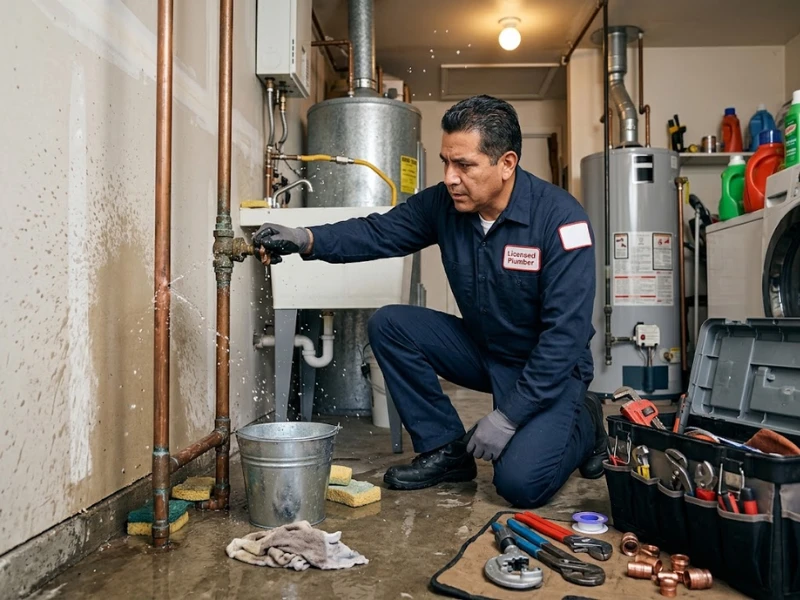
Safety First: Water and Electricity Don't Mix
Before you grab a bucket or a wrench, take ten seconds to make sure the area is safe. A burst pipe usually sprays water near outlets, appliances, extension cords or a light fixture, and water and electricity together create a genuine shock and fire risk. If the leak is anywhere near wiring, wet flooring over outlets, or your electrical panel, treat the area as energized until you know otherwise.
- Never stand in water to reach the electrical panel. If the floor around your panel is wet, leave it alone and call your electric utility.
- If the panel is dry and reachable without wading, shut off power to the affected area — but only if you can do it safely.
- Smell gas or hear hissing? Leave immediately without flipping switches, and call your gas utility from outside.
- Water near a plugged-in appliance? Do not touch the appliance. Cut power at the breaker first if it is safe to do so.
- Call 911 for any life-safety emergency, and call your electric utility if water is anywhere near outlets or the panel.
You cannot reach the shut-off valve, the water is near the electrical panel, you smell gas, or the leak is in a ceiling or wall you cannot access. In those cases, leave the area and call a professional rather than risking injury.
Shut Off the Main Water Valve
The single most effective thing you can do is stop the flow of water. Every minute the supply stays open, more water enters the home. Your main shut-off valve is usually in the basement, near the water meter on the street side of the home, or in a utility closet. Turn a gate valve clockwise until it stops, or rotate a ball valve handle a quarter turn so it sits across the pipe.
If you have never located your valve, our guide on finding and shutting off your main water valve walks through where to look in a typical Chicago home. Once the main is closed, open the lowest faucet in the house — often a basement sink or laundry tub — to drain the remaining water from the lines and relieve pressure at the break.
Valves in older Lincoln Park buildings sometimes seize from years of disuse. Turn firmly but never force a handle to the point of breaking it. If the valve will not move, call for help rather than risk snapping the stem and making the leak worse.
Drain the Pipes and Limit the Damage
With the water off, your goal shifts from stopping the flow to containing what has already escaped. The source of the water determines how much work is ahead of you, and whether you can manage it or need a professional on site.
| Situation | What to do next |
|---|---|
| Supply line burst | Main valve off, lowest faucet open, then call for pipe repair and replacement. |
| Leak at a joint or fitting | Wrap with a patch and clamp as a temporary fix, then request leak repair. |
| Water reaching a finished area | Move furniture and rugs clear, and call for emergency plumbing help. |
| Water near electricity | Do not enter — shut the power if safe and wait for a professional. |
Use towels, buckets and a wet/dry shop vacuum to remove standing water, and move electronics, documents and valuables to a dry floor above the water line. If water has soaked into carpet, drywall or insulation, the longer it sits the more likely it is to grow mold, so getting a professional extraction and drying process started matters as much as the repair itself.
Document and Protect Belongings
Damage from a sudden pipe failure is usually covered by homeowners insurance, and a clear record makes the claim far smoother. Before you discard anything, take a few minutes to capture the scene.
- Record a walk-through video and photos from several angles, including the water line on walls and the failed pipe itself.
- Photograph damaged furniture, electronics, flooring and stored items where they sit.
- Make a list of damaged belongings and keep receipts for temporary repairs and supplies.
- Call your insurer's claims line once safety is handled, and ask what they need before you throw anything away.
Keep the damaged section of pipe if it can be removed safely. Insurers sometimes ask to see it, and it helps the plumber identify why the failure happened.
What to Do While You Wait for the Plumber
Once the emergency dispatch is on the way, use the time to reduce damage and prepare for the technician. A few simple steps make the repair faster and the cleanup easier.
- Close doors to the affected area to keep moisture and humidity contained.
- Move valuables, electronics and pets to a dry part of the home.
- If you applied a temporary patch, keep the water off until the plumber arrives and confirms the pipe is sound.
- Clear a path to the break and to the main valve so the technician can work without delay.
- Run fans and a dehumidifier if the area is otherwise safe, but keep the HVAC off if it was in the flooded zone.
If the water is more than a shallow puddle, keeps rising, or contains sewage, do not wait it out — treat it as an emergency plumbing call. Our guide on when to call an emergency plumber helps you tell a true emergency from a problem that can wait.
How to Prevent the Next Burst Pipe
Once the pipe is repaired and the home is dry again, take steps to keep the next failure from happening. In Chicago, freezing temperatures and aging plumbing are the two biggest culprits, and both are manageable.
- Insulate vulnerable pipes in basements, crawlspaces, garages and along exterior walls.
- Keep heat on during cold snaps — even while traveling — and let faucets drip on the coldest nights.
- Disconnect garden hoses and shut off outdoor spigots before the first freeze.
- Check your water pressure if you notice hammering or banging; high pressure stresses joints and fittings.
- Replace aging pipes before they fail — see pipe repair and replacement.
- Learn your shut-off valve today, so you can act in seconds if it happens again.
If your home has an older water heater that has started to leak or drop in pressure, that is another common source of indoor flooding worth addressing before it bursts. See our leak repair team and our post on what to do when your basement floods for the full playbook.
Frequently Asked Questions
How much water can a burst pipe release?
A typical burst supply line can release several gallons per minute, and larger lines push out even more. Within an hour that can mean hundreds of gallons soaking into floors, walls and ceilings, which is why shutting off the main valve is always the first priority.
Should I shut off the electricity if a pipe bursts?
If you can safely reach your breaker panel without stepping in water, shut off power to the affected area. Never touch the panel if the floor around it is wet. If there is any doubt, leave the home and call your electric utility and 911 if needed.
How do I temporarily stop a burst pipe until a plumber arrives?
After closing the main valve, wrap the leak tightly with a rubber patch or silicone tape and secure it with a hose clamp. This is only a temporary fix under low pressure. Keep the water off if possible and let a licensed plumber make the permanent repair.
Does homeowners insurance cover a burst pipe?
Sudden and accidental water damage from a burst pipe is usually covered by a standard homeowners policy, including the pipe repair and the resulting damage. Damage from gradual leaks or neglect is often excluded, so report the loss promptly and document everything.
Why do pipes burst in Chicago homes?
The most common causes are freezing and thawing during hard winters, high pressure, corroded galvanized or aging copper lines, and pipes installed too close to exterior walls in older Lincoln Park buildings. A pressure check and an inspection can spot the risk early.
Who should I call for a burst pipe in Lincoln Park?
Call Plumber Lincoln Park at (773) 514-3504 for emergency plumbing, leak repair and pipe replacement across Lincoln Park and Chicago's North Side. Our licensed plumbers are available seven days a week.