
When to Use Hydro Jetting for Your Drains
Snaking clears a lot of clogs, but it can only cut a narrow path through them — which is why so many drains clog again weeks later. Hydro jetting takes a different approach, scouring the inside of the pipe back to bare metal. Here is how it works, when it beats snaking, and when it is the wrong tool for the job.
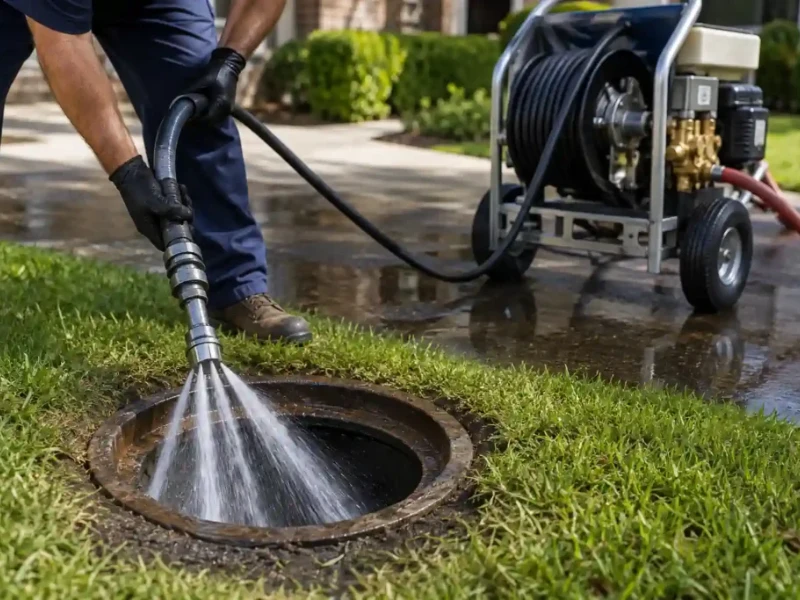
What Is Hydro Jetting?
Hydro jetting is a drain cleaning method that uses a high-pressure stream of water — typically 1,500 to 4,000 PSI — delivered through a specialized hose and nozzle. Unlike a drain snake, which is a cable that cuts into a clog, a hydro jetter blasts water in multiple directions to clean the entire pipe wall.
The key component is the nozzle. As water is forced through it, backward-facing jets push the hose deeper into the line while forward-facing jets cut through the blockage. Specialized nozzles let technicians tailor the job:
- Penetrating nozzles punch through a solid clog so the hose can advance.
- Flushing nozzles wash away the loosened debris and grease.
- Root-cutting nozzles use hardened blades or chains to slice through tree roots that have invaded a sewer line.
Because it cleans the full circumference of the pipe rather than one channel, hydro jetting removes the buildup that a snake leaves behind — the grease, scale and sludge that cause a clog to return.
Hydro Jetting vs Snaking
Both tools clear blockages, but they solve the problem in fundamentally different ways. Knowing the difference helps you understand what you are paying for.
| Consideration | Drain snaking | Hydro jetting |
|---|---|---|
| How it clears | Cuts a channel through the clog | Scours the entire pipe wall |
| Grease and scale | Mostly left behind | Fully flushed away |
| Tree roots | Temporarily pierced | Cut and flushed out |
| How long it lasts | Can re-clog within weeks | Often lasts a year or more |
| Best for | Quick, localized clogs | Greasy, scaled or root-filled lines |
Snaking is fast, affordable and perfect for a single stubborn blockage, such as a hair clog in a bathroom drain. Hydro jetting costs more up front but delivers a deeper, longer-lasting clean — which is why it is the go-to for recurring clogs in older Chicago homes where years of buildup have narrowed the pipe.
When Hydro Jetting Is the Best Choice
Hydro jetting shines whenever the problem is not just a clog but the buildup around it. It is usually the right call when:
- The same drain clogs repeatedly. A snake clears the hole; hydro jetting removes the cause — the grease, soap scum and scale coating the pipe.
- Grease is the culprit. Kitchen lines in homes and restaurants build up a sticky layer that a cable cannot remove. High-pressure water strips it away completely.
- Tree roots have entered the sewer line. Root-cutting nozzles are one of the most effective ways to clear roots, which are common in older Chicago neighborhoods where trees and clay laterals coexist.
- You want preventive maintenance. Restaurants often jet their grease lines on a schedule. In a home, a professional hydro jetting service every year or two keeps a problem line flowing.
- Multiple fixtures are slow or backing up. That pattern points to the main line, where a whole-pipe clean is far more effective than chasing fixtures one at a time.
Hydro jetting is also an excellent precursor to repair. If a line is headed for replacement, cleaning it first lets a camera see the pipe clearly and helps your plumber give an accurate recommendation.
When You Should Avoid It
Hydro jetting is powerful, and power must be matched to the pipe. There are times when it does more harm than good:
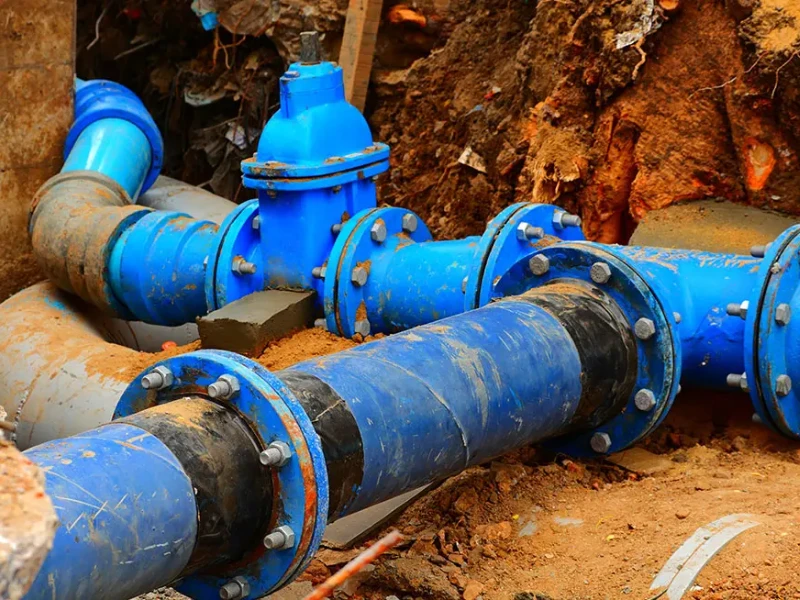
Old, corroded, cracked or already-leaking lines can be damaged by high pressure. Cast iron that has rusted thin, clay tile that has shifted, or a line with an existing bellied or broken section should be inspected — and often repaired or lined — before any high-pressure cleaning.
- Soft or brittle pipe materials that cannot withstand the pressure.
- Known cracks, holes or a collapsed section that could worsen under the blast.
- Improper plumbing such as tight or unvented bends where the hose could become stuck.
- Chemical residue in the line. If someone recently poured a caustic drain cleaner, the standing chemical can splash back when water hits it. If a chemical was used, mention it before service begins — see why chemical drain cleaners are risky.
This is exactly why a sewer camera inspection is frequently done first. Feeding a camera into the line confirms the pipe material and condition, locates the blockage, and proves the line can handle the pressure before a single drop is jetted.
What to Expect During Service
A professional hydro jetting service is methodical, and it usually follows a predictable sequence:
- Inspection. A camera is sent down the line to identify the material, confirm the blockage and check for damage.
- Access point. The technician finds the correct cleanout or access, sometimes using the roof vent or an exterior cleanout.
- Protection. Floors and nearby surfaces are covered, because high-pressure cleaning can splash.
- Jetting. The hose is fed in while water breaks up and flushes away the blockage, working from the access point toward the main.
- Verification. A final camera pass confirms the pipe is clean and, if you had drain cleaning done elsewhere in the home, that those lines flow freely too.
Most residential lines can be jetted in an hour or two, depending on length and how heavy the buildup is. You should expect some water to be pushed through the system, so avoid running other fixtures during the service. Once complete, you will likely notice not just a cleared drain but fixtures that drain faster than they have in years.
If you are dealing with a stubborn, greasy or root-choked line, to schedule a camera inspection and hydro jetting, call (773) 514-3504. Our licensed plumbers serve Lincoln Park and Chicago's North Side seven days a week.
Frequently Asked Questions
Is hydro jetting safe for all drain pipes?
It is safe for most modern PVC, ABS, cast iron and clay lines when the pressure is set correctly and the pipe is inspected first. It is not recommended for fragile, corroded or already-cracked pipes, which a camera inspection can identify before cleaning starts.
How is hydro jetting different from snaking?
A snake cuts a channel through a clog, so grease and debris remain on the pipe walls and the clog often returns. Hydro jetting scours the entire interior surface, flushing grease, scale and roots out of the line for a much longer-lasting result.
How often should a drain be hydro jetted?
Most homes do not need a fixed schedule. High-grease businesses like restaurants jet every few months, while a home may go years between services. For recurring clogs, annual maintenance or a one-time deep clean is usually enough.
Can hydro jetting remove tree roots from a sewer line?
Yes. Hydro jetting is one of the most effective ways to clear roots that have entered a sewer line. A root-cutting nozzle slices through them and flushes them away, and a follow-up camera inspection confirms the line is clear.
Does hydro jetting damage pipes or cause leaks?
When performed by a trained plumber on an inspected, sound pipe, hydro jetting does not damage the line. Problems arise only when high pressure meets an already-weakened pipe, which is why a camera inspection often comes first.