
Toilet Keeps Running? Here's How to Fix It
A toilet that keeps running is one of the most common — and most ignored — plumbing problems in Chicago homes. It sounds harmless, but that constant hiss means water is flowing down the drain around the clock, quietly inflating your water bill and wearing out parts that will eventually fail completely.
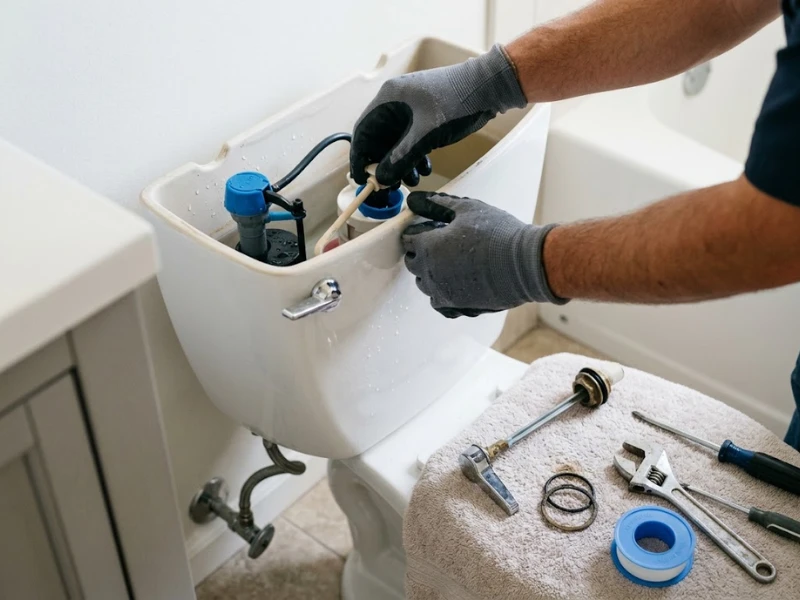
Why a Toilet Runs Continuously
Your toilet tank is a simple balance system. When you flush, the flapper lifts and releases water into the bowl, the tank drains, and the flapper drops back to seal the opening. As the water level drops, the float falls and triggers the fill valve, which refills the tank. When the water reaches the right level, the fill valve shuts off. A running toilet means one of those steps is out of balance.
There are only a few ways that balance breaks:
- A leaking flapper. The rubber flapper no longer seals tightly, so water seeps from the tank into the bowl. The tank never stays full, and the fill valve keeps running to replace the lost water.
- A misadjusted or failing fill valve. The float is set too high, or the fill valve itself has worn out and cannot shut off.
- A stuck or tangled flush chain. A chain that is too short holds the flapper open, while a chain that is too long can get caught under the flapper.
- A damaged flush valve seat. Mineral buildup or a crack in the seat prevents the flapper from sealing no matter how new it is.
A single constantly running toilet can waste thousands of gallons of water every month. If your bill jumps and you hear the toilet running, that is almost certainly the cause. The same principle applies to any hidden leak — see our guide on hidden water leak warning signs.
The Flapper and Flush Valve
The flapper is the single most common culprit behind a running toilet. It is a rubber seal that sits at the bottom of the tank and drops into place after a flush. Over time, chlorine, hard water minerals and simple age cause the rubber to stiffen, warp or develop a film of slime that prevents a tight seal. Once that happens, water escapes into the bowl continuously.
Here is how to check whether your flapper is the problem:
- Turn off the water supply and lift the tank lid.
- Add a few drops of food coloring to the tank water — but do not flush.
- Wait 10 to 15 minutes. If color appears in the bowl without flushing, the flapper is leaking.
- Inspect the flapper for cracks, stiffness or a distorted shape, and check the chain for slack or tangles.
If the flapper is worn, replacing it is a cheap and quick fix. Flappers sold at hardware stores cost only a few dollars and most snap or clip onto the existing overflow tube in under a minute. If the new flapper still leaks, the flush valve seat beneath it is likely rough or cracked — a problem best handled by a licensed plumber who can smooth or replace the seat.
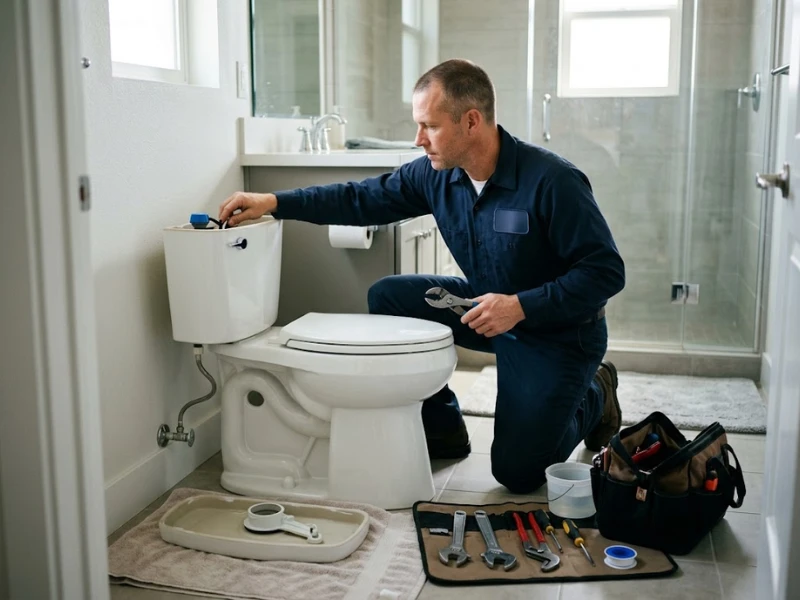
The Fill Valve and Float
The fill valve is the tall assembly that refills the tank with fresh water after each flush. It is controlled by a float — either a traditional ball float on an arm or, in modern toilets, an integrated float cup on the fill valve body. If the float is set too high, the water level rises above the overflow tube and trickles continuously into the bowl. If the fill valve is worn, it may fail to shut off entirely.
Two symptoms point to the fill valve:
- Water level is at or above the top of the overflow tube. This is an adjustment problem. On a modern fill valve, turn the adjustment screw or slide the float clip down to lower the water level to about one inch below the overflow tube.
- The tank is full but you still hear water running, and the sound stops when you press down on the float. This usually means the fill valve is sticking or worn and should be replaced.
Replacing a fill valve is a bit more involved than swapping a flapper. You shut off the supply, drain the tank, disconnect the supply line and install a new valve. Many homeowners manage it, but if the shut-off valve is stuck or the supply line is corroded — common in older Chicago buildings — it is safer to let a professional handle it.
Quick Fixes You Can Try
Before you call anyone, try these steps. Most running toilets can be quieted within a few minutes.
| Symptom | Likely cause | Quick fix |
|---|---|---|
| Hiss never stops, water flowing to bowl | Worn flapper | Replace the flapper |
| Water reaches overflow tube | Float set too high | Lower the float or turn the adjustment screw |
| Runs after every flush, then stops | Chain too tight or too long | Adjust chain slack to about half an inch |
| Runs constantly, tank stays full | Failing fill valve | Replace or clean the fill valve |
| Will not stop after part swaps | Cracked flush valve seat | Call a plumber |
- Shut off the water at the supply valve behind the toilet and flush to empty the tank.
- Check the chain and flapper. Make sure the chain is not tangled, not caught under the flapper, and has a little slack.
- Clean the flapper and seat. Wipe away mineral film and slime, which can be enough to restore a seal.
- Adjust the float. Set the water level roughly one inch below the overflow tube.
- Replace cheap parts. Flappers and fill valves are inexpensive; swapping both often fixes the problem for good.
Buy a toilet repair kit that includes a flapper and fill valve together. They cost only slightly more than buying separately and you will have both on hand if the first fix does not solve it. If you keep having trouble with the toilet beyond a running tank, recurring blockages may be the real issue — read why your toilet clogs repeatedly.
When to Call a Plumber
Most running toilets are easy to fix, but some point to deeper problems that worsen over time. Call a licensed plumber if:
- The toilet runs even after you replace the flapper, chain and fill valve.
- The flush valve seat or the base of the tank is cracked.
- Water pools around the base of the toilet or the floor feels soft — this can indicate a failing wax ring or a hidden water leak.
- The shut-off valve behind the toilet is stuck or will not fully close.
- The toilet is old, constantly failing, or uses excessive water per flush.
Our team provides toilet repair and full plumbing repair across Lincoln Park and Chicago's North Side. We can replace worn parts, correct water levels, seal leaks and, when it makes more sense, install a new efficient toilet. Call (773) 514-3504 to schedule a visit.
Frequently Asked Questions
How much water does a running toilet waste?
A constantly running toilet can waste anywhere from a few gallons to more than 200 gallons per day, depending on whether the leak is a slow trickle or a full continuous flow. Over a month that adds up to thousands of gallons and a noticeably higher water bill.
What is the most common reason a toilet keeps running?
The most common cause is a worn or misseated flapper that no longer seals against the flush valve. Water leaks from the tank into the bowl, the tank never refills fully, and the fill valve runs continuously trying to top it off.
Can I fix a running toilet myself?
Many running-toilet problems are simple DIY repairs. Replacing a flapper, adjusting the float height or cleaning a stuck fill valve often solves it in minutes. If the problem is a cracked flush valve seat, a faulty fill valve or a leak at the base, call a licensed plumber.
Why does my toilet keep running after I jiggle the handle?
Jiggling the handle can temporarily reseat a flapper or lift a stuck chain, but if the fill valve keeps running, the float or fill valve itself is likely out of adjustment or worn out. The fix is to adjust or replace the fill valve rather than rely on the handle.
Is a running toilet an emergency?
It is rarely an emergency, but it should not be ignored. A running toilet wastes water continuously and can sometimes mean a leaking flapper, a failing fill valve or a slow leak at the base that can damage flooring over time. Call a plumber if it persists after basic fixes.