
Hidden Water Leak Warning Signs You Should Never Ignore
The most expensive leaks in a home are the ones you cannot see. Water creeping behind a wall or under a floor causes silent damage for weeks before it shows itself, and by then the repair bill has grown far beyond a simple fix. Here are the warning signs that a hidden leak is at work — and how professionals track one down without tearing your home apart.
Why Hidden Leaks Are So Costly
A pipe does not have to burst to do serious damage. A pinhole leak the size of a pinhead can release dozens of gallons a day, and because the water lands inside a wall cavity or under a subfloor, it evaporates into the structure instead of pooling where you would notice it. That slow, steady moisture is the engine of a very expensive problem.
The costs stack up in several ways at once:
- Wasted water. A steady hidden leak can waste thousands of gallons a month and show up as a spike in your water bill.
- Structural damage. Constant moisture rots wood framing, softens drywall, warps flooring and can corrode the very pipe that is leaking.
- Mold and mildew. Damp, dark wall cavities are ideal for mold, which harms indoor air quality and can trigger allergies and asthma.
- Compounding repairs. A leak caught in a week might need a pipe fitting; the same leak caught in a season can mean replacing drywall, flooring, cabinets and framing.
Older Chicago homes are especially vulnerable. Many were built with galvanized steel supply lines that corrode from the inside out, so by the time a pinhole leak appears, the pipe is often failing along its whole length. Catching the signs early is how you turn a major renovation into a minor repair.
Warning Signs Inside Your Home
Hidden leaks almost always leave clues before visible water appears. Watch for these interior signs:
- A musty or damp smell that never goes away, especially in a basement, bathroom or under a sink.
- Stained or discolored walls and ceilings — brown, yellow or ring-shaped marks that grow over time.
- Peeling, bubbling or cracked paint and soft or crumbly drywall.
- Warped, cupping or buckling floors, or tiles that have come loose.
- Damp patches or a spongy feel under carpet or near the base of walls.
- The sound of running water when every faucet and appliance is off.
- A warm spot on a hard floor, which can point to a leaking hot-water line running beneath a slab.
- Constantly low water pressure or a water heater that never seems to keep up — see common causes of dripping faucets and hidden water loss.
Individually, some of these are minor. Together, or when one keeps returning after you repair it, they strongly suggest water is escaping somewhere you cannot see.

Warning Signs Outside and on the Meter
Some of the best evidence sits outside your home or right at the water meter. These signs often catch a leak before any interior damage is visible:
- A water meter that keeps spinning. Turn off every fixture and appliance, then watch the meter. If the dial or digital display still moves, water is flowing somewhere it should not be.
- An unexplained jump in your water bill, especially in a month with no change in habits.
- Patches of unusually green, lush grass or a soggy, spongy spot in the yard, which often marks a leaking underground supply or sewer line.
- Puddles or damp spots near the foundation that appear without rain.
- Cracks in a foundation, driveway or walkway that widen over time as the soil beneath shifts.
- A drop in water pressure at every fixture at once, which can mean a major leak in the main line.
Shut off all water indoors and out, note the meter reading, and wait 30 to 60 minutes without using any water. Check it again. Any change confirms an active leak — a hidden one if you cannot find a visible source.
How Professional Leak Detection Works
You do not have to break open walls to find a hidden leak. Modern leak detection uses a set of non-invasive tools that pinpoint the source before any demolition begins:
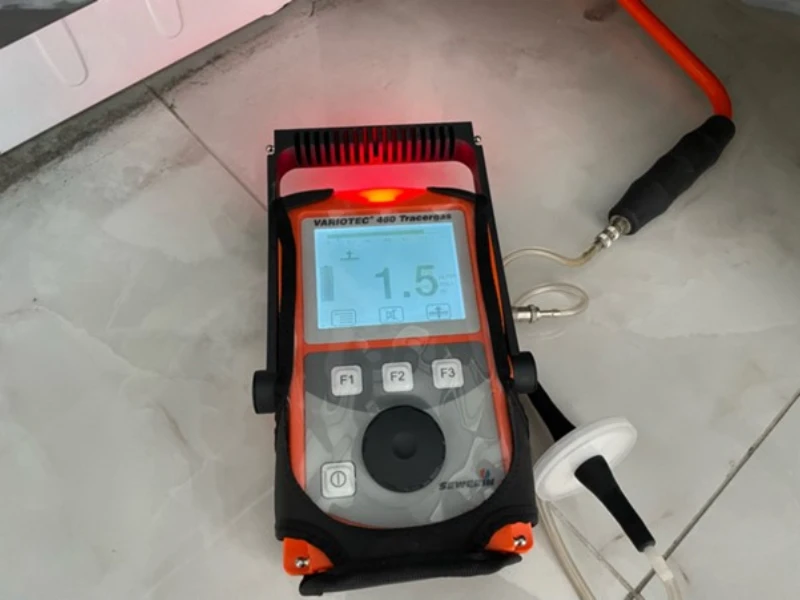
- Acoustic listening devices amplify the sound of water escaping a pressurized pipe, letting a technician trace a leak underground or inside a wall.
- Thermal imaging cameras reveal temperature differences caused by hidden moisture, showing where a wall or floor is wet behind the surface.
- Moisture meters confirm and map damp areas so the technician knows exactly how far the water has spread.
- Pressure and flow testing isolates which section of the system is losing water by pressurizing lines individually.
- Video inspection can examine the inside of drain and sewer lines to find a leak the camera can see directly.
Together, these tools turn guesswork into a targeted diagnosis. Instead of opening several walls hoping to find the problem, a plumber can usually mark the precise spot — often within inches — and make one clean opening for the repair.
Repairing a Hidden Leak
Once the leak is located, the repair itself is usually quick compared to the detective work that found it. The right method depends on what is leaking and where:
| Leak location | Typical repair |
|---|---|
| Supply pipe in a wall | Open the wall at the marked spot, cut out the failed section and replace it. |
| Pipe under a slab or floor | Repair at the located point or reroute the line above the floor to avoid future slab work. |
| Fitting or joint | Tighten or replace the fitting and pressure-test the line. |
| Underground main or lateral | Excavate at the marked location, or use trenchless methods for a minimal footprint. |
| Aging galvanized lines | Often better to replace a full run than patch a pipe that will fail again nearby. |
Any leak repair should end with a pressure test and a recheck of the area to confirm the fix holds. Because hidden leaks so often coexist with broader pipe problems, a plumber may recommend assessing the whole line — see plumbing repair and professional leak repair for the full range of solutions.
If a leak has gone unnoticed for a long time, the water damage itself may be the bigger issue. Damp drywall, flooring and framing need to be dried and, in serious cases, treated like water-damage cleanup — the same steps that apply after a flood, covered in our guide to what to do when a basement floods. Addressing the moisture is just as important as stopping the water, because hidden damp is what feeds mold.
If a hidden leak caused damage, photograph everything before repairs and keep receipts. Sudden, accidental damage is often covered, but long-term gradual leakage may be excluded — so an early, documented diagnosis helps your claim.
Suspect a hidden leak in your home? Call (773) 514-3504 to schedule professional leak detection. Our licensed plumbers serve Lincoln Park and Chicago's North Side seven days a week and can usually identify the source in a single visit.
Frequently Asked Questions
How do I know if I have a hidden water leak?
Look for an unexplained water bill increase, a meter that keeps moving when nothing is in use, musty odors, warped floors or peeling paint, damp patches, and the sound of running water when everything is off. Any of these warrants a professional leak inspection.
How does professional leak detection work?
Plumbers use acoustic listening equipment to hear escaping water, thermal imaging and moisture meters to find damp hidden areas, and pressure or flow testing to isolate the leaking section — all without tearing up floors and walls unnecessarily.
Will homeowners insurance cover a hidden water leak?
Policies typically cover sudden, accidental water damage. Repairing the pipe itself and damage from long-term gradual leakage may be excluded. Review your policy and document everything promptly.
Can a hidden leak fix itself?
No. A hidden water leak will not stop on its own and generally gets worse as the opening widens. Water damages framing, drywall and flooring the whole time, so early detection and repair save far more than they cost.
How much water does a hidden leak waste?
It depends on the leak, but even a small pinhole can waste thousands of gallons a month and add significantly to your water bill. A steadily rotating meter with no fixtures running is the clearest proof that water is being lost.