
Why Is My Faucet Dripping? Common Causes and Fixes
That steady drip is more than an annoyance — it is money running down the drain and, over time, a risk to your sink and cabinets. Most dripping faucets trace back to a worn part that costs little to replace. This guide explains what causes the drip, which fixes you can tackle yourself, and when it is time to call a plumber.
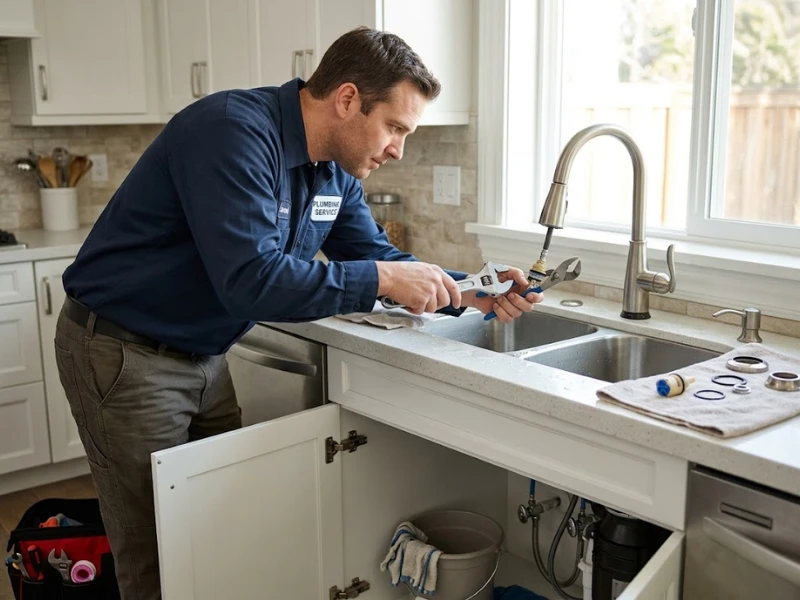
How Much Water a Drip Wastes
A single drip does not look like much, but it never stops. A faucet leaking at just one drop per second can waste more than 3,000 gallons of water over a year — enough to fill dozens of bathtubs — and that is before you count the energy cost if it is the hot-water tap. A faster, more consistent stream wastes far more. The EPA notes that household leaks nationwide account for an enormous volume of wasted water, and a dripping faucet is one of the most common culprits.
Beyond the water bill, a drip causes real damage. Constant moisture under the spout can stain porcelain and grout, and water that escapes down the exterior of the faucet or into the cabinet below can warp cabinetry and promote mold. Fixing the leak early keeps a small repair from becoming a larger one. If you suspect water is getting where it should not, our leak detection service can trace hidden moisture before it spreads.
A faucet that drips only when you are not looking can signal pressure problems elsewhere. Soft spots, bubbling paint or a musty smell under the sink often mean a hidden leak is already doing damage.
Common Causes of a Dripping Faucet
Almost every dripping faucet comes down to a seal that has stopped sealing. Water pressure is always pushing against the internal parts, and over months and years those parts wear out. The most common causes are:
- Worn washers and valve seats: In compression faucets, a rubber washer presses against a metal seat. Both wear down from friction and minerals, letting water slip past.
- Damaged O-rings: Small rubber O-rings seal the stem or spout. When they crack or flatten, water leaks around the base or stem, often showing up as a drip at the base rather than the spout.
- Failed cartridges: Cartridge and ceramic-disc faucets rely on a single cartridge. Sediment and mineral buildup grind it down until it can no longer shut off flow cleanly.
- Corroded valve seat: Mineral deposits corrode the seat where the washer presses, causing leaks that continue even after a new washer.
- Worn seals in ball faucets: Ball-type faucets use springs and seats that wear with use, leading to drips around the handle.
- High water pressure: Excessively high household pressure stresses every seal and valve in the home, accelerating wear. This is common in older buildings and worth checking.
Identifying which part has failed tells you whether the fix is a five-dollar washer or a new cartridge. Hard Chicago water, which carries dissolved minerals, speeds up wear on all of these components, which is one reason the region sees so many faucet drips.
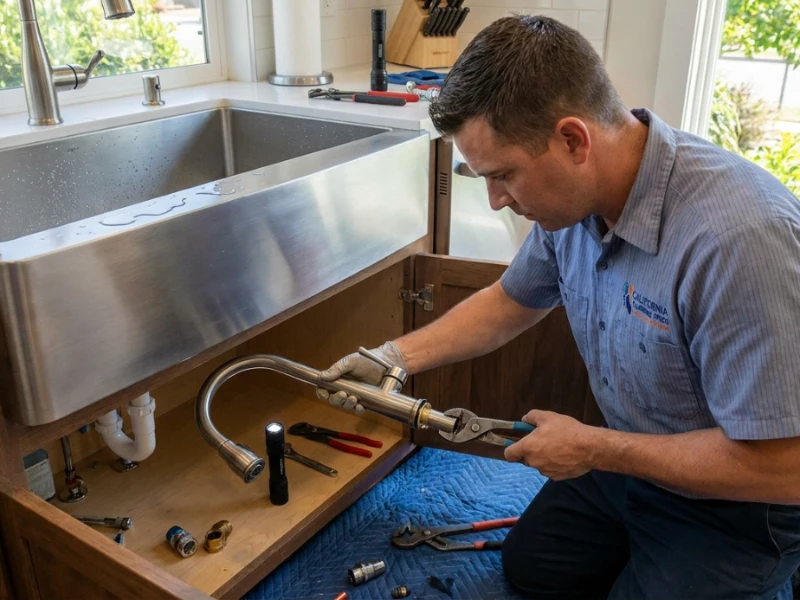
Compression, Cartridge and Ball Faucets
Knowing which type of faucet you have makes the repair much easier, because each design fails in its own way and uses different parts.
| Faucet type | How it seals | Common drip cause |
|---|---|---|
| Compression | Rubber washer presses on a valve seat | Worn washer or corroded seat |
| Cartridge | A single cartridge controls flow and temperature | Worn or clogged cartridge |
| Ball | Springs and seats press against a metal ball | Worn springs and seats |
| Ceramic disc | Two ceramic discs slide to control flow | Sediment or worn disc seals |
Compression faucets are the oldest style and the easiest to understand: two separate handles for hot and cold, each compressing a washer. Cartridge faucets, common on modern kitchen and bath fixtures, use one replaceable cartridge — often the simplest fix of all, because you swap a single part. Ball and ceramic-disc faucets typically use seats, springs or seals that can be replaced individually. In every case, the strategy is the same: shut off the water, disassemble far enough to reach the worn part, and replace it.
DIY Fixes and When to Stop
For a handy homeowner, replacing a faucet's internal parts is a reasonable DIY project. The general steps are straightforward, and repair kits with the right washers, O-rings and cartridges are inexpensive and widely stocked.
- Shut off the water at the supply valves under the sink, and open the faucet to release pressure.
- Plug the drain so small screws and parts do not disappear down the pipe.
- Disassemble the handle and remove the retaining nut to reach the stem or cartridge.
- Inspect the parts — a flattened washer, cracked O-ring or scored cartridge is your smoking gun.
- Replace the worn parts with matching components, and clean mineral deposits from the seat and threads.
- Reassemble and test, then check under the sink for any weeping at the connections.
The leak continues after you replace the obvious parts; the valve seat or faucet body is corroded or cracked; the supply valves under the sink are seized or leaking; or the faucet is old enough that replacement parts are hard to find. Continuing to force corroded parts can turn a small repair into a bigger one.
It is also worth knowing when repair is throwing good money after bad. If the fixture is old, low quality or already been fixed once, a new faucet may be the smarter spend. General plumbing issues beyond the fixture itself often call for plumbing repair rather than a faucet-specific fix.
When to Call a Plumber
Many drips are a quick DIY win, but some situations are better handed to a professional. Call a licensed plumber if you are unsure how to disassemble your faucet without damaging it, if the leak comes from behind the wall or under the cabinet rather than the fixture, if you see corrosion or water damage, or if the drip returns soon after your repair. A plumber can also check your household water pressure, which, when it is too high, quietly destroys seals throughout the home.
Professional faucet repair saves you the guesswork and the risk of a cross-threaded connection or a stripped valve, and it is usually fast and affordable. If you have noticed drips elsewhere, unexplained damp spots or a rising water bill, it is worth ruling out a larger problem — our guide to hidden water leak warning signs explains what to look for. Call Plumber Lincoln Park at (773) 514-3504 and we will pinpoint the cause and fix it right.
Frequently Asked Questions
How much water does a dripping faucet waste?
It depends on the drip rate. A slow drip of one drop per second can waste more than 3,000 gallons a year, while a steadier stream wastes far more. Even a modest drip adds up on your water bill and can stain or damage the sink and cabinet below.
What causes a faucet to drip after it is turned off?
The most common cause is a worn valve seat or a damaged O-ring or washer inside the faucet that no longer seals tightly against water pressure. Sediment and mineral buildup from hard water accelerate that wear. Replacing the worn part usually stops the drip.
Can I fix a dripping faucet myself?
Often, yes. Replacing a washer, O-ring or cartridge is a straightforward DIY repair on many faucets, and repair kits are inexpensive. If the leak continues after replacing the obvious parts, or the faucet body, seat or internal threads are corroded, it is time to bring in a plumber.
Why is my faucet dripping from the base instead of the spout?
A drip at the base usually points to a failed O-ring or worn seal around the spout or handle, or a loose packing nut rather than a valve seat problem. Water can also pool under the sink and rot the cabinet, so a base leak is worth addressing right away.
When should I replace a faucet instead of repairing it?
Replace it if the faucet is old or low quality, if parts are hard to find, if the body or valve seat is corroded, or if you have repaired it more than once and it keeps leaking. A new faucet is often cheaper over time than repeated repairs on a worn-out fixture.
Does a dripping faucet mean higher water bills?
Yes. A constant drip is metered water you pay for and never use, and if it is a hot-water tap you are also paying to heat it. Fixing the leak is one of the simplest ways to lower a water bill and stop the waste.